Wireless vs. Wired Trailer Lights: The Ultimate Towing Safety GuideWhether you are launching a boat at a crowded ramp, hauling livestock across county lines, towing an RV on a cross-country road trip, or moving heavy equipment between job sites, proper trailer lighting is your primary line of defense.
For decades, traditional hardwired tail light kits were the undisputed standard. However, the rapid evolution of heavy-duty battery technology, high-output LEDs, and digital signal transmitters has given rise to a new contender: commercial-grade magnetic wireless trailer lights.
If you are evaluating whether to repair a corroded hardwired setup or upgrade to cordless technology, making the right choice requires understanding how these systems perform in real-world hauling environments.
This guide breaks down the engineering, long-term durability, and operational differences between wireless and wired trailer lights to help you choose the best system for your rig.
1. Installation and Versatility: Setup Time vs. Multi-Vehicle Utility
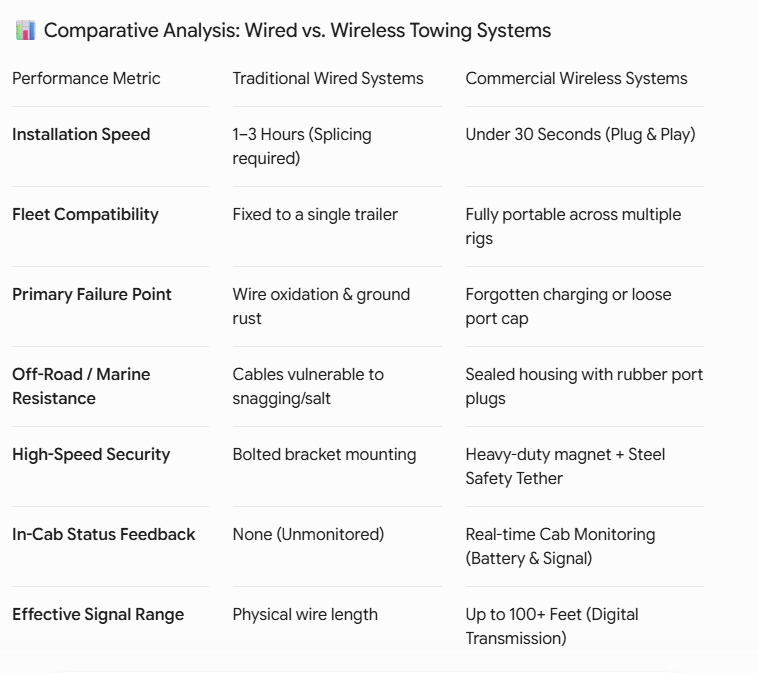
- Wired Trailer Lights: Installing a traditional hardwired system is a time-consuming, multi-hour project. It requires routing long copper wire harnesses underneath the trailer frame, securing zip-ties, and soldering or splicing connections into a vehicle's 4-pin or 7-pin plug. If you own multiple trailers—such as a farm utility trailer, a boat trailer, and an enclosed cargo rig—you must repeat this process for every single piece of equipment.
- Wireless Magnetic Lights: Wireless systems prioritize rapid deployment and cross-fleet flexibility. You simply slap the rubber-coated magnetic bases onto a steel frame section, plug the digital transmitter into your tow vehicle, and achieve full street-legal compliance in under 30 seconds. A single wireless kit can be swapped instantly between work trucks, RV towed vehicles (flat towing), and farm equipment without touching a single wire.
2. Signal Stability and Range: The 100-Foot Challenge
The primary technical hurdle for early wireless trailer lights was signal interference. When towing long rigs, heavy aluminum box trailers, or livestock haulers, weak radio signals can cause frustrating flickering or signal drops.
- Wired Trailer Lights: Copper wires offer direct physical signal transmission, ensuring immediate signal transfer as long as the wiring harness and ground connection remain undamaged.
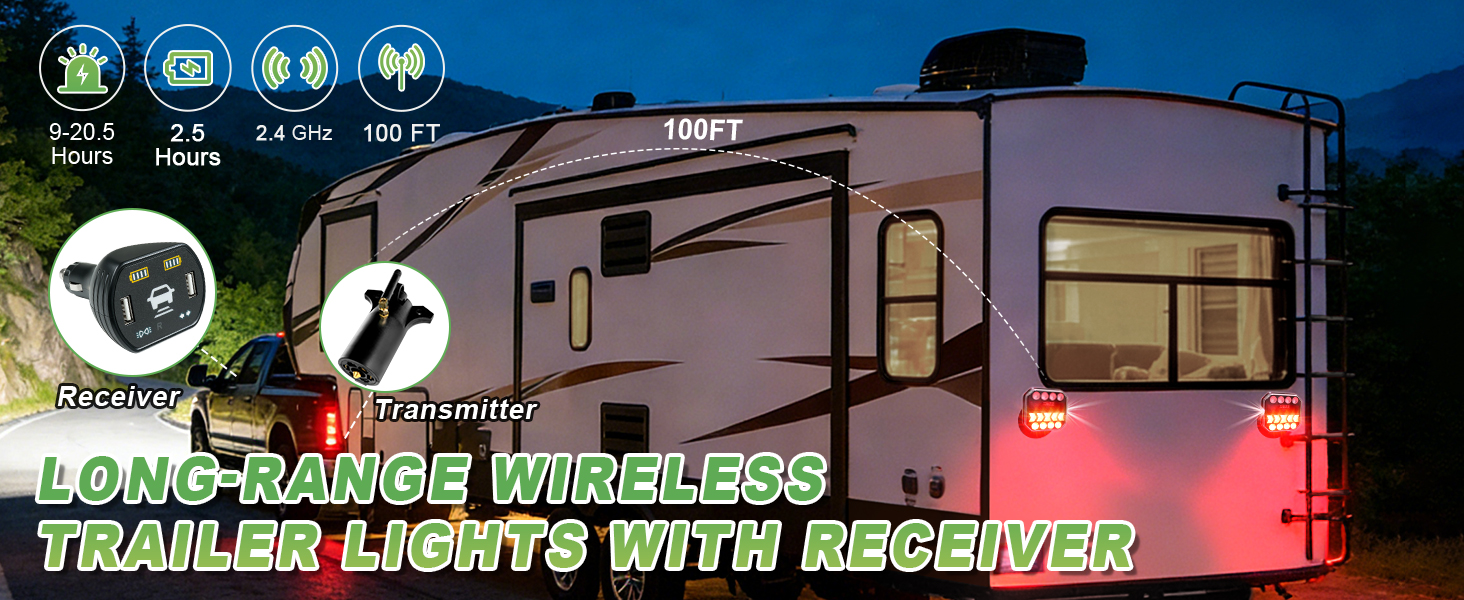
- Modern Wireless Ecosystems: Advanced commercial-grade wireless kits now utilize high-frequency digital transmission protocols designed to penetrate thick steel and aluminum enclosures. High-performance systems deliver an active signal range of 100+ feet, making them completely reliable for long hotshot trailers, extended RV setups, and agricultural machinery without experiencing signal lag.
3. Highway Security: Overcoming Vibration and Drop-Off Risks
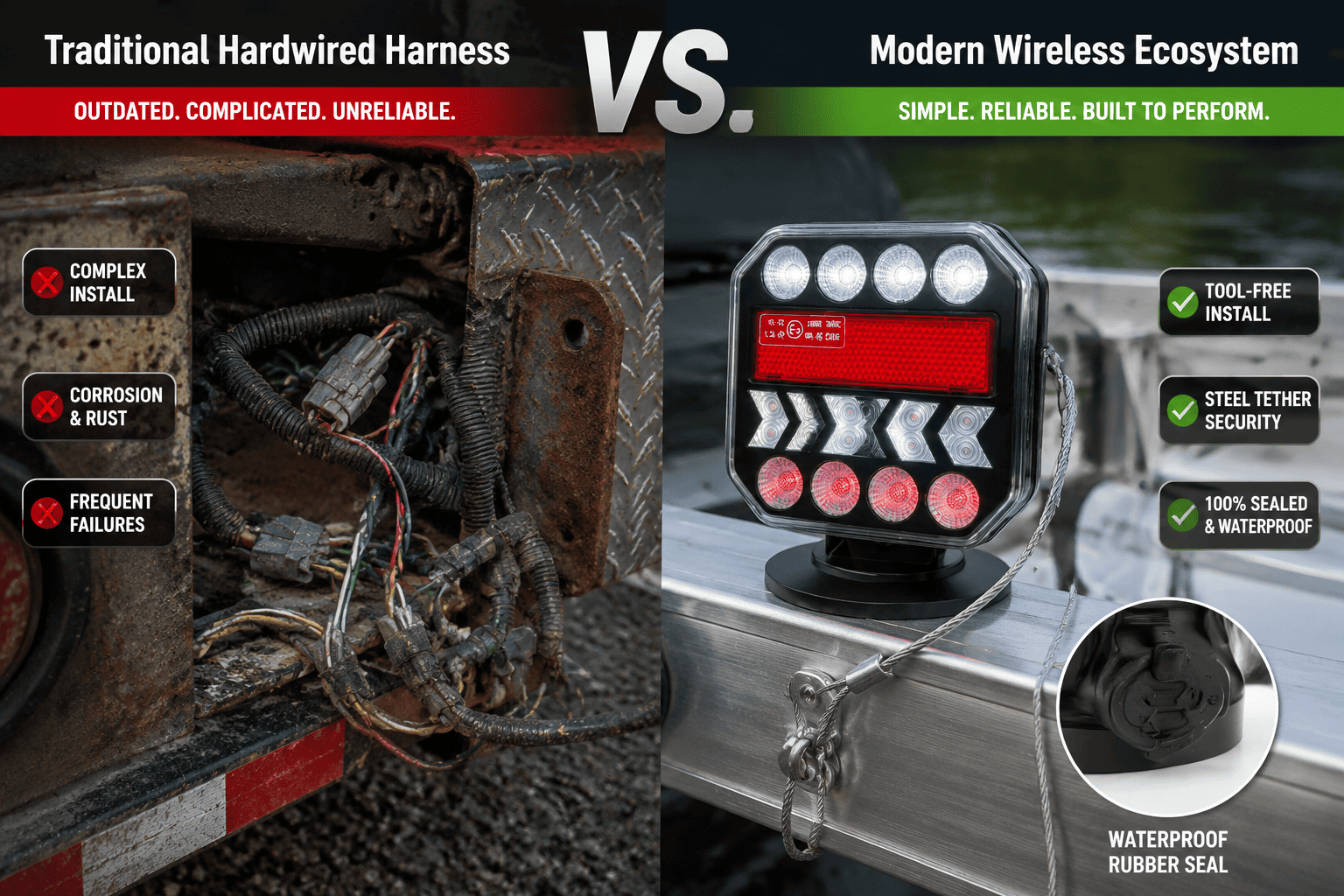
- Wired Trailer Lights: Bolted directly to the frame, wired lights cannot fall off during transit. However, loose wires hanging beneath the chassis remain highly vulnerable to being snagged by road debris, off-road brush, or low clearance obstacles.
- Wireless Trailer Lights: A common concern with magnetic lights is whether high-speed highway vibration or severe washboard dirt roads can break the magnetic bond. Professional-grade wireless systems resolve this by pairing high-intensity magnet bases with an essential secondary hardware backup: integrated steel safety tethers.
The Safety Tether Rule
For high-speed highway travel and rugged farm roads, always loop the included security steel tether cables around a solid structural frame member. In the rare event that an extreme pothole or road hazard dislodges the magnetic base, the safety wire acts as a mechanical fail-safe, keeping your light bar safely secured to your rig instead of bouncing into highway traffic.
4. Weather Resistance and Long-Term Maintenance
- Wired Trailer Lights: While wired systems never require battery recharging, their vulnerability lies in chemical corrosion. Exposure to road salt, marine submersion at boat ramps, animal waste on livestock haulers, and constant pressure washing rapidly oxidizes copper wiring and corrodes 7-pin plugs, resulting in intermittent ground faults.
- Wireless Trailer Lights: Cordless units house their internal circuitry within sonic-welded, weather-sealed enclosures. Because they contain internal rechargeable batteries, long-term weatherproofing depends on a simple maintenance habit involving the charging port.
Weatherproofing Best Practice
After charging your wireless lights via USB for an upcoming haul, always press the thick rubber sealing cap back into the port until it sits completely flush. When driving at 65 MPH in heavy rain, water is forced against the rear of your trailer with intense pressure. A fully seated rubber plug prevents road mist from entering the port, protecting the internal motherboard and battery architecture from short circuits.
5. Operational Control: In-Cab Dashboard Monitoring
- Wired Trailer Lights: Standard hardwired systems provide zero operational feedback to the driver. If a tail light bulb burns out, a wire snaps, or a fuse pops mid-trip, you will remain completely unaware until pulled over by law enforcement or alerted by other motorists.
- Wireless Trailer Lights: Next-generation smart wireless systems feature dedicated in-cab dashboard monitors. Plugs directly into your truck's console, these active monitors give drivers real-time visual tracking of turn signal replication, wireless signal connection strength, and precise battery percentages right from the driver’s seat. This technology completely eliminates "blind towing" anxiety on long night hauls.
The Final Verdict
- Choose Hardwired Lights if you operate a single dedicated commercial trailer that remains permanently attached to one vehicle 365 days a year, and you have the tools and time to perform routine solder and wire maintenance.
- Choose Wireless Magnetic Lights if you manage multiple trailers, haul boats or horses, flat-tow an RV, or simply want to eliminate the ongoing hassle of corroded wiring harnesses.
By selecting a commercial-grade system equipped with 100-foot digital range, in-cab dashboard monitoring, steel safety tethers, and flush-fit rubber charging caps, you enjoy total cordless convenience without compromising an ounce of highway safety.