
When upgrading to a wireless towing system, most haulers focus entirely on battery life and magnetic strength. But there is a crucial factor that often gets overlooked until the package arrives at your doorstep: mounting geometry.
Not every trailer back-end is built the same. While a single, long wireless light bar is fantastic for wide, flat steel bumpers, it can be a nightmare to mount on trailers with split rear gates, center ramps, boat winch posts, or narrow frame rails.
That is where dual-pod wireless kits like the AgriEyes T312C come in.
Choosing between a full-length light bar and a dual-pod magnetic setup comes down to your specific trailer frame and hauling needs. Here is how to pick the right layout for your rig.
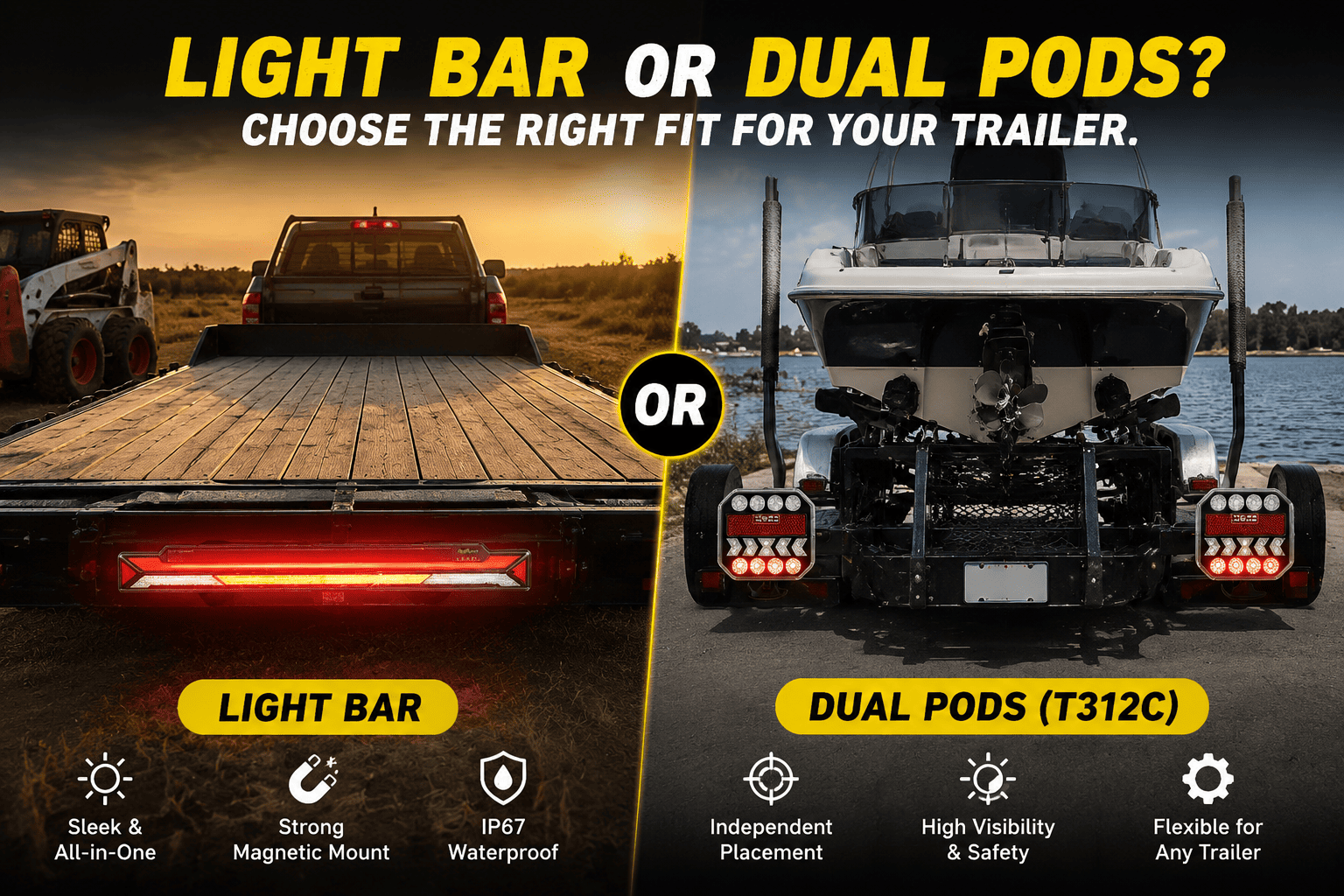
1. The Light Bar Setup: Best for Wide, Unobstructed Steel Bumpers
Integrated light bars combine tail lights, brake signals, and license plate illuminators into a single, rigid housing.
- Best Suited For: Heavy-duty utility box trailers, flatbed commercial haulers, and wide steel bumpers with a long, continuous flat surface.
- The Limitation: Because a light bar requires a wide, continuous metal mounting area, it leaves zero room for error. If your trailer has a center-folding ramp, a rear ladder, or a split tailgate, a long bar simply won't sit flush.
2. The Dual-Pod Advantage: Maximum Mounting Versatility
Independent dual-pod systems like the AgriEyes T312C split the lighting system into two distinct, high-powered round magnetic modules.
- Best Suited For: Boat trailers, horse trailers with center-opening doors, equipment trailers with narrow vertical frame rails, and asymmetrical rear setups.
- Why It Works: Dual pods allow you to place the left and right lights as far apart as legally required, regardless of what is happening in the center of your trailer gate. You get maximum visual width for trailing drivers without obstructing loading ramps or tailgate latches.
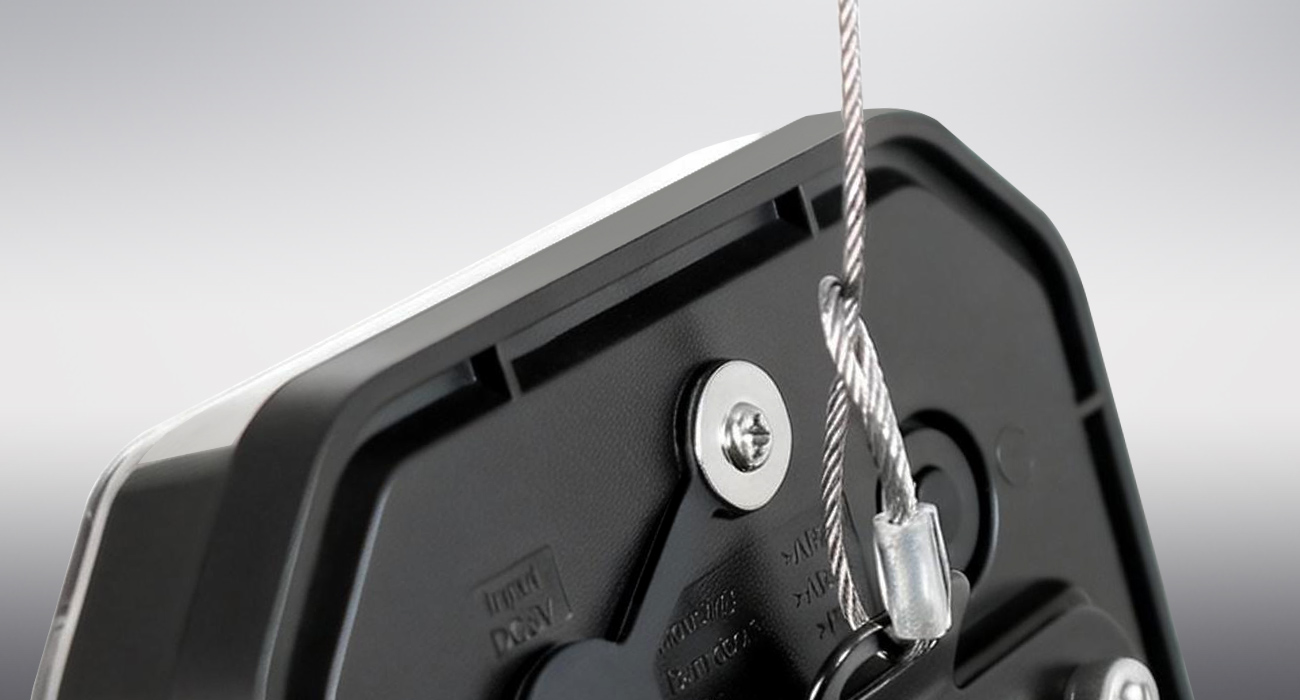
3. Installation Essentials: Protecting Independent Pods
Because dual-pod setups consist of two separate units mounted on opposite corners of your frame, following proper hardware safety protocols is twice as important:
- Double Up on Safety Tethers: The T312C kit includes dedicated security steel tether cables for both light pods. Never skip these during highway travel. Loop each steel cable tightly around a structural frame point on both the left and right sides of your trailer. If a severe road bump ever dislodges a pod, the tether ensures your light hangs safely from the frame instead of becoming road hazards.
- Check Both Weather Seals: Dual pods mean two independent USB charging ports. After charging your T312C modules before a trip, firmly press the rubber sealing cap into the charging port of both pods until completely flush. Road mist and tires-spray hit the outer corners of a trailer with extreme force; properly seated rubber caps keep internal signal boards bone-dry in heavy rain.
Match Your Lighting to Your Frame
Don't force a one-size-fits-all solution onto a custom trailer frame. Whether you need the unified presence of a full light bar or the nimble flexibility of dual independent pods, picking the right form factor ensures a safer, cleaner setup on every haul.