led-work-lights-vs-factory-lights-differenceIf you’ve ever tried finishing a harvest, hooking up an implement, or fixing equipment after sundown, you already know the problem: stock truck and tractor lights don't always provide enough coverage for the job. Factory headlights do a fine job showing you what's directly down the road, but they may leave dark spots around the equipment and work area.
That’s where auxiliary LED work lights come in. They aren't meant to replace your headlights—they're built to put light on the job itself. Here’s a quick breakdown of how factory lights and auxiliary work lights differ, and how using both can make working after dark a lot less frustrating.
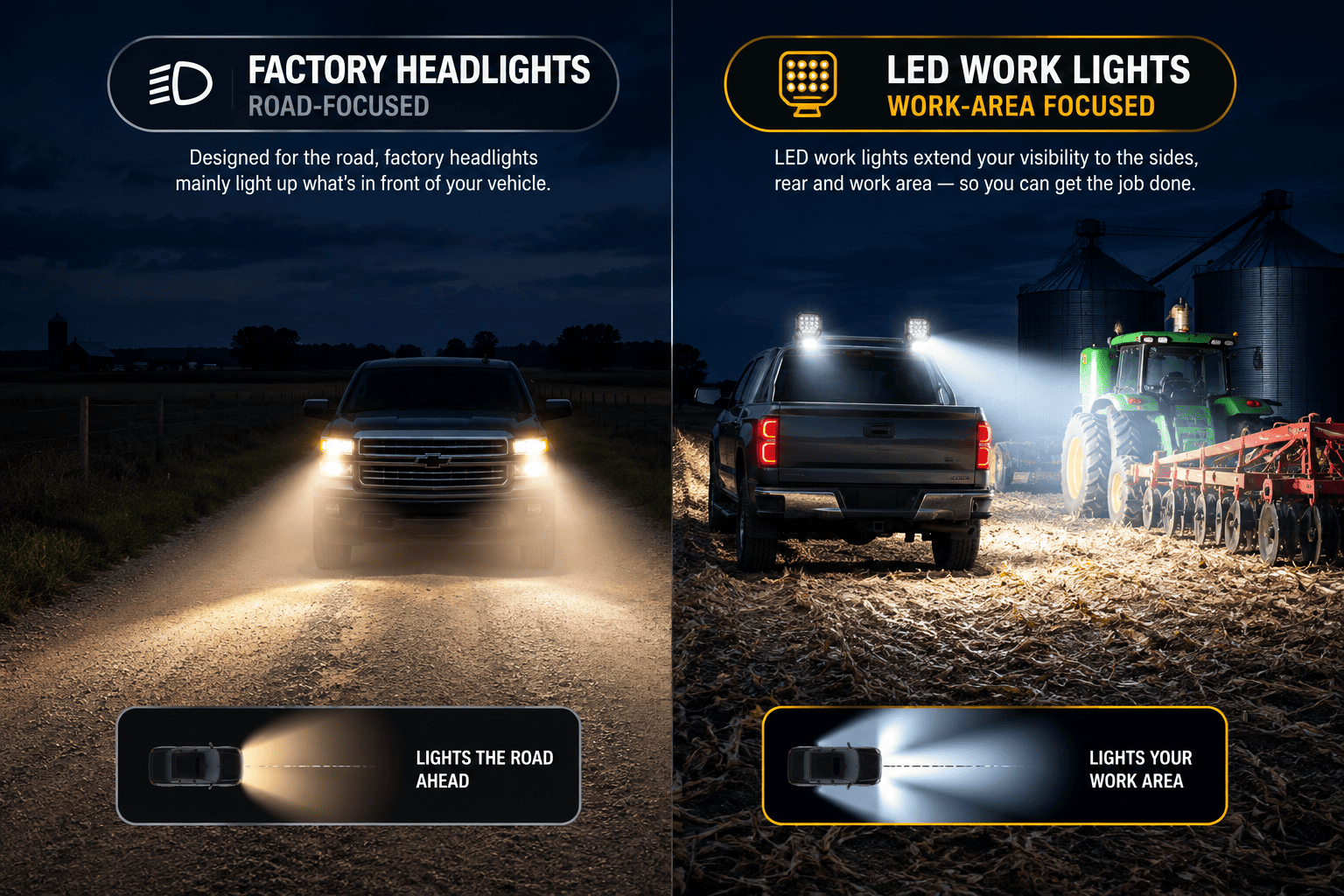
The main difference comes down to where the light needs to go and why.
Built for driving down the road. They throw a focused beam straight ahead, shaped specifically to show you the pavement while minimizing glare for other drivers.
Built for working around the vehicle. Instead of focusing strictly on forward road travel, work lights can illuminate attached equipment, side areas, and specific work zones around a truck, tractor, or service vehicle.
Factory headlights are designed around road-focused beam patterns. Work lights give you more options depending on what you're doing:
Spread light wide and close up. These are great for lighting up a tractor implement, utility bed, or a staging area right next to your truck.
Shoot a tight beam farther out—useful for checking fence lines, tree rows, or distant spots across a field.
Mix both spot and flood LEDs in one housing to give you close-up width along with a little extra reach.
Headlights point forward, and that's pretty much it. While you can adjust their vertical alignment in the shop, you can't quickly swing them around to light up something off to the side.
Factory lights run straight off your vehicle's main wiring harness and light switch. Adding auxiliary lights gives you a few different ways to set things up:
Wired directly into an auxiliary switch or separate circuit on your truck or tractor. Best for permanent setups you use every day.
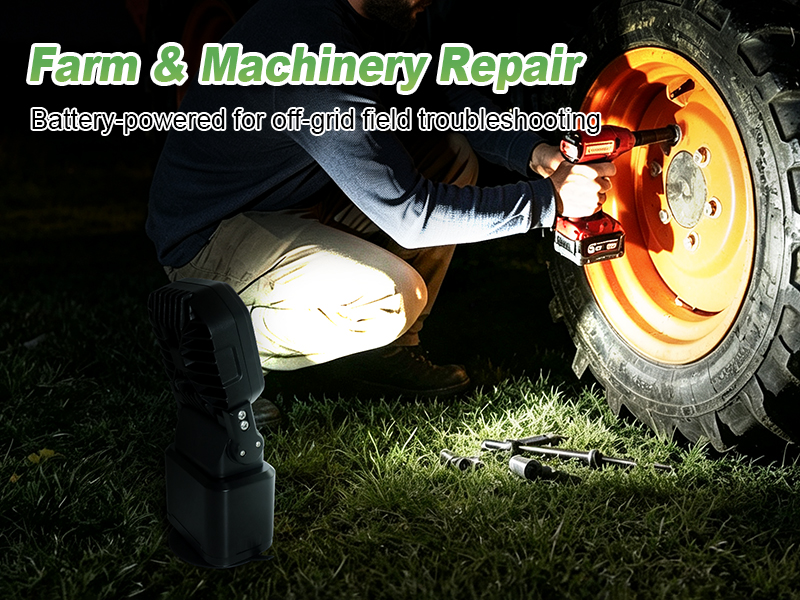
Great if you switch between different vehicles or don't want to mess with drilling holes and running wire. For instance, the AgriEyes L011B runs on an internal 6000mAh battery (charged via USB-C) and sticks to flat metal surfaces with a magnetic base.
Q: Can I use auxiliary work lights instead of my factory headlights on the road?
Generally, no. Auxiliary work lights are designed for task illumination rather than replacing a vehicle's required headlighting system. Their use on public roads depends on the specific light, installation, vehicle, and applicable state regulations.
Q: Do LED work lights pull a lot of power?
It depends on the light's wattage and how long you run it. A 25W LED work light, for example, uses relatively little power compared with higher-wattage auxiliary lights. Rechargeable models can also run from their internal battery instead of drawing power from the vehicle.
Q: Why would I want amber strobe modes on a work light?
It can be useful when you need both task lighting and increased visibility around a work area. An amber mode allows the same fixture to switch from white illumination to a warning light when working around equipment, job sites, or other areas where added visibility is helpful.
Factory headlights get you from point A to point B, but auxiliary work lights are what help you get the actual work done after dark. Matching the right beam pattern, power setup, and mount to your routine makes night jobs run a whole lot smoother.
If you need something portable that doesn't require permanent wiring, take a look at the AgriEyes L011B. It combines motorized 360° pan-and-tilt, rechargeable power, magnetic mounting, and white/amber lighting modes in one portable light.