Working late in the field or on a dark job site requires reliable illumination. Factory headlights and standard high beams often fall short when you need to cover broad work areas, illuminate attached equipment, or improve visibility around your vehicle.
Auxiliary LED work lights can provide better visibility and make it easier to work around your vehicle after dark. However, choosing the right light involves more than just finding the brightest option available.
When evaluating options, don't just look for more light—look for the right light. Here is a guide to beam patterns, directional control, mounting options, and durability specs to help you select the ideal LED work light for your setup.
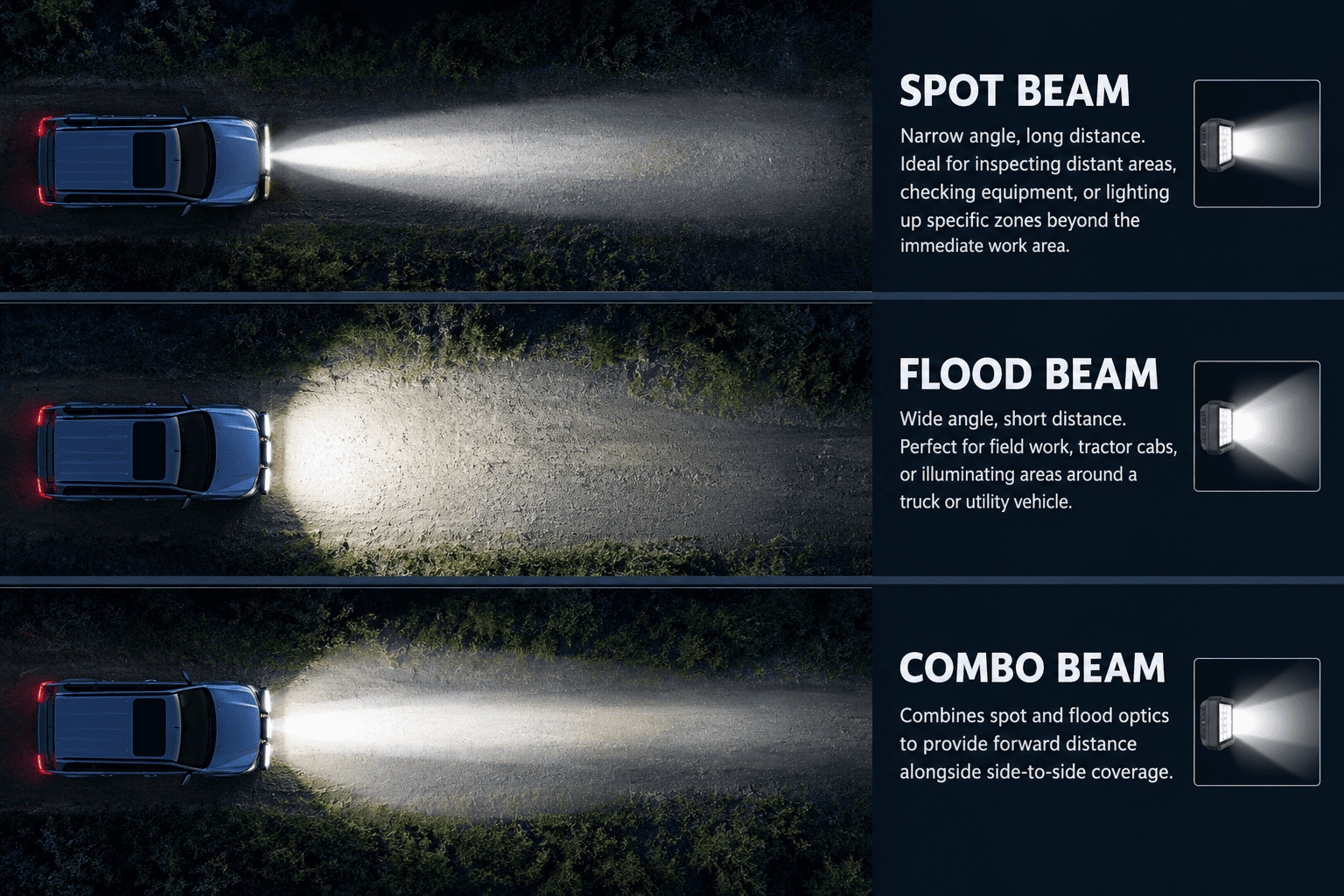
1. Match the Beam Pattern to Your Task
The way an LED fixture distributes light dictates where and how effectively it illuminates your work zone:
- Spot Beams (Narrow Angle): Project a concentrated beam over longer distances. They are useful for inspecting distant areas, checking equipment, or lighting up specific zones beyond the immediate work area.
- Flood Beams (Wide Angle): Disperse light broadly across a wide, close-range area. They are well suited for field work, tractor-mounted applications, or illuminating areas around a truck or utility vehicle.
- Combo Beams: Integrate both spot and flood optics into a single housing to provide forward distance alongside side-to-side perimeter coverage.
2. Consider Directional Adjustability & Control
The right beam direction can be just as important as overall brightness. Fixed work lights stay pointed in one direction once mounted. If your work area shifts around your vehicle, redirecting the light requires stopping and manually repositioning the housing.
- Fixed Mounts: Simple options best suited for static tasks where the target area never changes (e.g., rear reverse assistance).
- Remote-Adjustable Work Lights: Models like the AgriEyes L011B use motorized pan-and-tilt adjustment, allowing operators to rotate the beam 360° horizontally and 90° vertically with a 315MHz wireless remote from up to 65 ft (20 m) away without leaving the cab.
3. Look for Multi-Function Work Lights
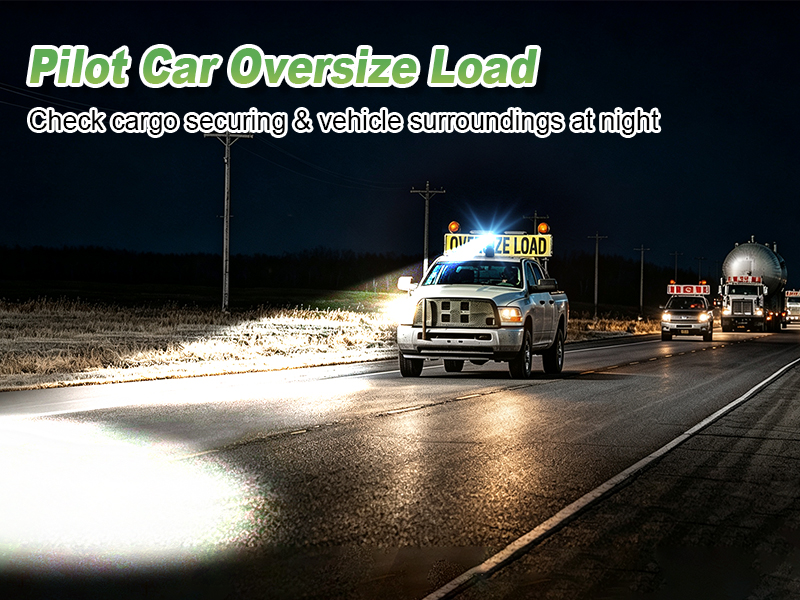
Night operations on farms or active job sites often require both task illumination and vehicle visibility.
- Single-Mode Lights: Provide standard white light output only.
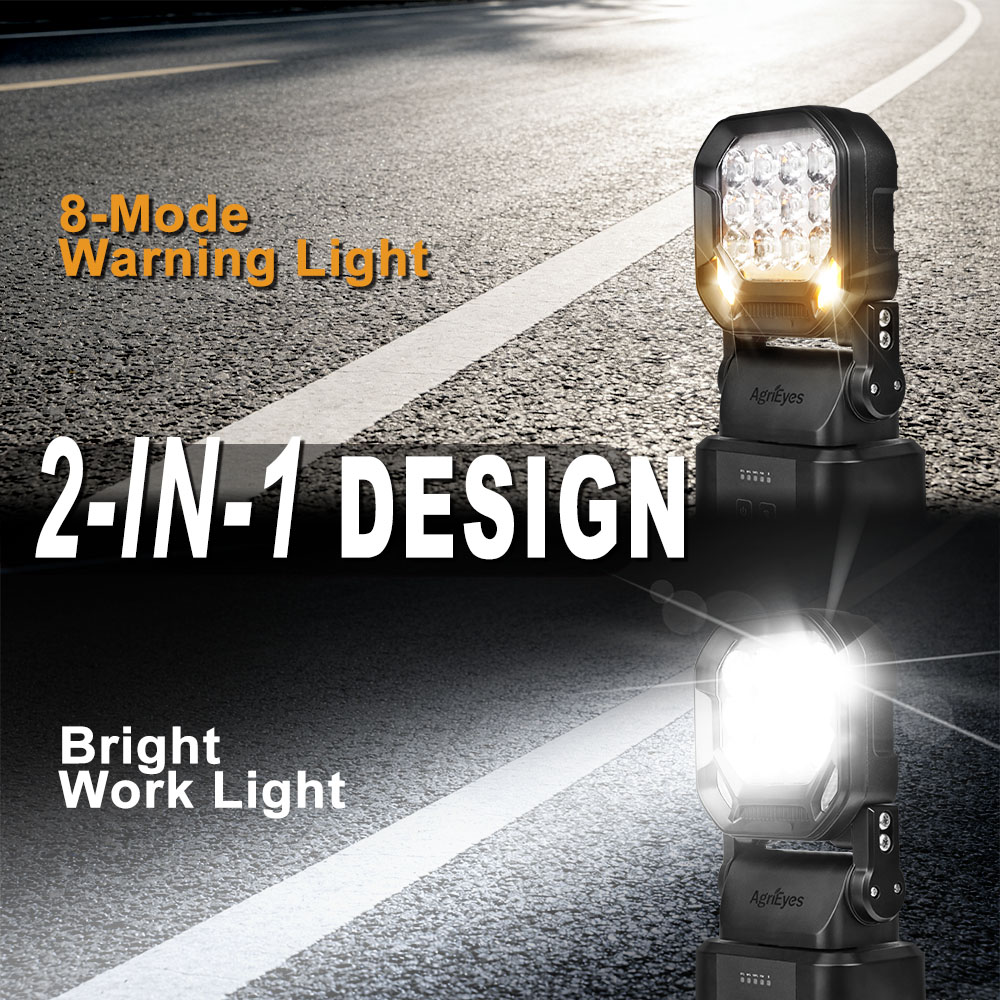
- Multi-Function Work & Strobe Lights: Allow you to switch between work lighting and amber warning modes when additional vehicle visibility is needed. The AgriEyes L011B pairs a 25W white work light with 4 amber LEDs featuring 8 flash modes—combining task lighting and warning signals in a single fixture.
4. Mounting & Power Supply: Permanent vs. Portable
How you mount and power your LED work lights depends on whether you need a permanent fleet setup or a flexible, multi-vehicle solution:
- Hardwired Bracket Mounts: Require drilling and running wiring harnesses to the vehicle battery. Ideal for dedicated service rigs or permanent tractor installations.
- Magnetic Mount & Rechargeable Power: Magnetic-base work lights can be quickly attached to suitable metal surfaces without drilling or permanent installation. Powered by an internal 6000mAh battery providing up to 2 hours of continuous high-power use via USB-C, the L011B can be moved between compatible tractors, trailers, and service trucks as needed.
5. Check Durability Ratings for Harsh Environments
Agricultural and commercial work environments subject lighting fixtures to heavy vibration, dust, and severe weather:
- Ingress Protection (IP Rating): Choose a rating based on your working environment. An IP64 rating provides protection against dust and water splashes, while higher ratings such as IP67 are designed for applications involving temporary water immersion.
- Lens & Housing Materials: Polycarbonate (PC) lenses can offer good impact resistance for demanding outdoor applications, including exposure to gravel, branches, and other debris. Weather-sealed housings designed for a wide operating temperature range (e.g., -23°C to 65°C) help protect internal components in demanding outdoor environments.
Summary Checklist
| Key Feature | What to Look For | L011B Advantage |
|---|
| Beam Pattern | Flood / wide coverage | 25W white work light |
| Direction | Remote adjustment | 360° pan + 90° tilt |
| Warning Mode | Amber strobe | 8 selectable flash modes |
| Mounting | Portable / magnetic | Tool-free magnetic base |
| Power | Rechargeable | 6000mAh battery + USB-C |
| Control | Wireless remote | Up to 65 ft (20 m) range |
Frequently Asked Questions
Are lumens the most important spec when buying an LED work light?
Not necessarily. Lumens measure total light output, but they don't tell you where that light goes. Beam pattern, coverage, and proper aiming can be just as important for real-world usability. A well-aimed flood beam may provide more useful illumination than a higher-output light that is poorly positioned.
Can I install LED work lights without drilling holes in my truck or tractor?
Yes. Magnetic-base work lights like the AgriEyes L011B attach securely to flat steel surfaces without drilling holes or running permanent wiring harnesses.
What is the benefit of having an amber strobe mode on a work light?
An amber strobe mode can make the vehicle or equipment more noticeable to nearby workers and traffic, which can be useful when working in low-light or active job-site environments.
Choose the Light That Fits the Job
The right LED work light depends on more than brightness. Beam pattern, directional control, mounting, power, and durability all matter when you're working after dark.
For applications that require flexible positioning and portable lighting, the AgriEyes L011B combines remote-adjustable beam control, white work lighting, amber warning modes, rechargeable power, and magnetic mounting in one compact unit.