
Boat launching exposes trailer lights to some of the harshest conditions on the road: high-pressure water spray, mud, temporary submersion, and aggressive saltwater exposure. For decades, boat owners have suffered through corroded wire harnesses, blown fuses, and flickering bulbs caused by moisture trapped inside trailer frame rails.
As cordless technology advances, boaters are making the switch to modern wireless trailer lights. But one critical question remains before backing down the ramp: Are wireless trailer lights waterproof enough for boat launching?
In most cases, quality wireless trailer lights can handle boat launch environments when they are built with appropriate ingress protection (such as IP67 ratings) and operated according to manufacturer instructions. Reducing exposed wiring and frame connectors can help minimize common marine lighting problems like wire corrosion and connection failures.
Here is how wireless technology holds up during launch operations, how waterproof ratings work, and how to protect your setup at the ramp.
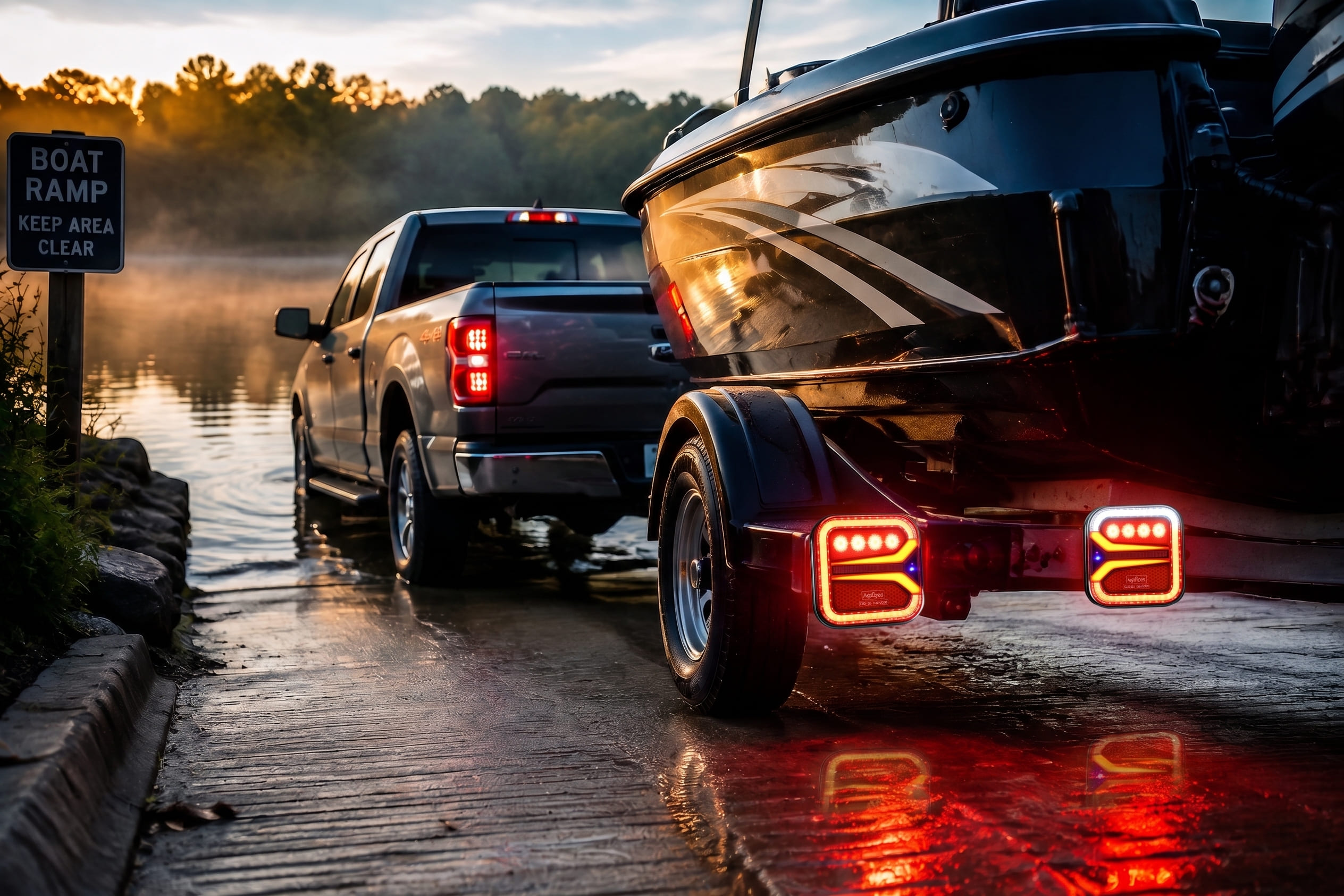
Why Traditional Wired Boat Trailer Lights Fail
Standard boat trailer lighting often degrades quickly because copper wiring and exposed frame connectors are vulnerable to water:
- Thermal Expansion & Contraction: Repeated heating and cooling cycles—such as backing warm light housings directly into cool water—can draw moisture past rubber seals over time.
- Internal Wire Corrosion: Water can creep into wire insulation, rusting internal copper conductors from the inside out.
- Grounding Shorts: Frame-grounded wiring harnesses lose electrical continuity when rust forms around trailer bolts and metal brackets.
Many wireless tow lights integrate the internal battery, signal receiver, and LED emitters into sealed, weather-resistant housings, bypassing frame-routed wiring completely.
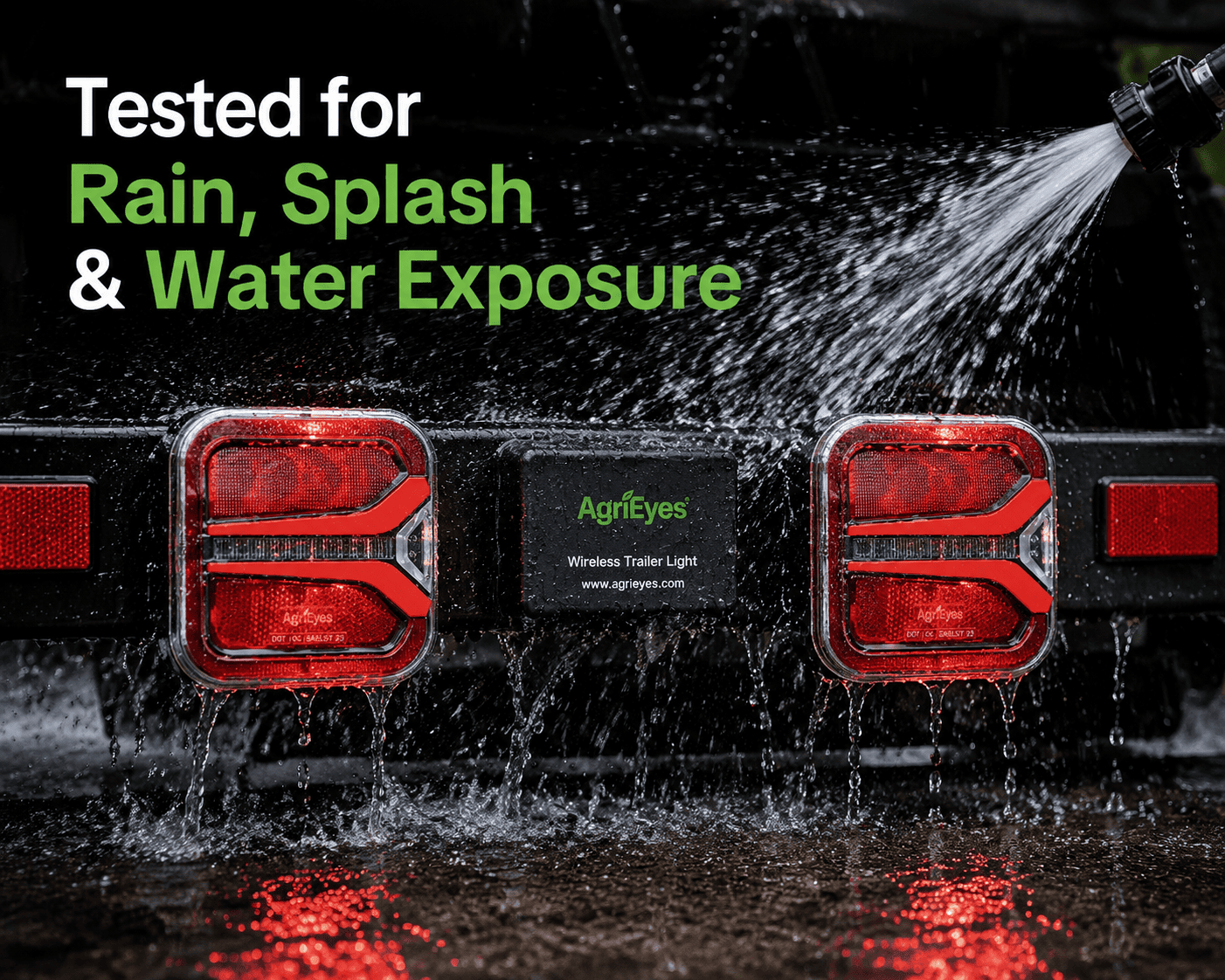
Understanding Ingress Protection (IP) Ratings
When selecting magnetic trailer lights for marine applications, evaluating the product’s Ingress Protection (IP) rating helps you understand its level of water resistance:
For marine use, systems engineered to IP67 standards utilize sonic-welded lenses and sealed outer casings to protect internal circuits against rain, spray, and temporary water exposure at the ramp.
Key Design Features for Marine Towing
AgriEyes trailer light features like sealed housings, protected charging ports, and wireless signal transmission are especially useful for boat owners who frequently move between ramps, storage areas, and highways.
When evaluating a portable lighting kit for marine use, several smart features help maximize road safety and convenience:
- Real-Time In-Cab Monitoring: Advanced kits include a dashboard receiver that displays real-time signal replication and exact battery levels right from the driver's seat.
- Reverse Beeper Alert: An audible beeping alarm on the receiver provides extra safety feedback whenever you back your boat down dark ramps.
- Rubber-Coated Magnets & Safety Tethers: Strong magnetic bases keep the light modules firmly attached to ferrous steel surfaces, while included steel safety cables offer secondary mechanical backup.
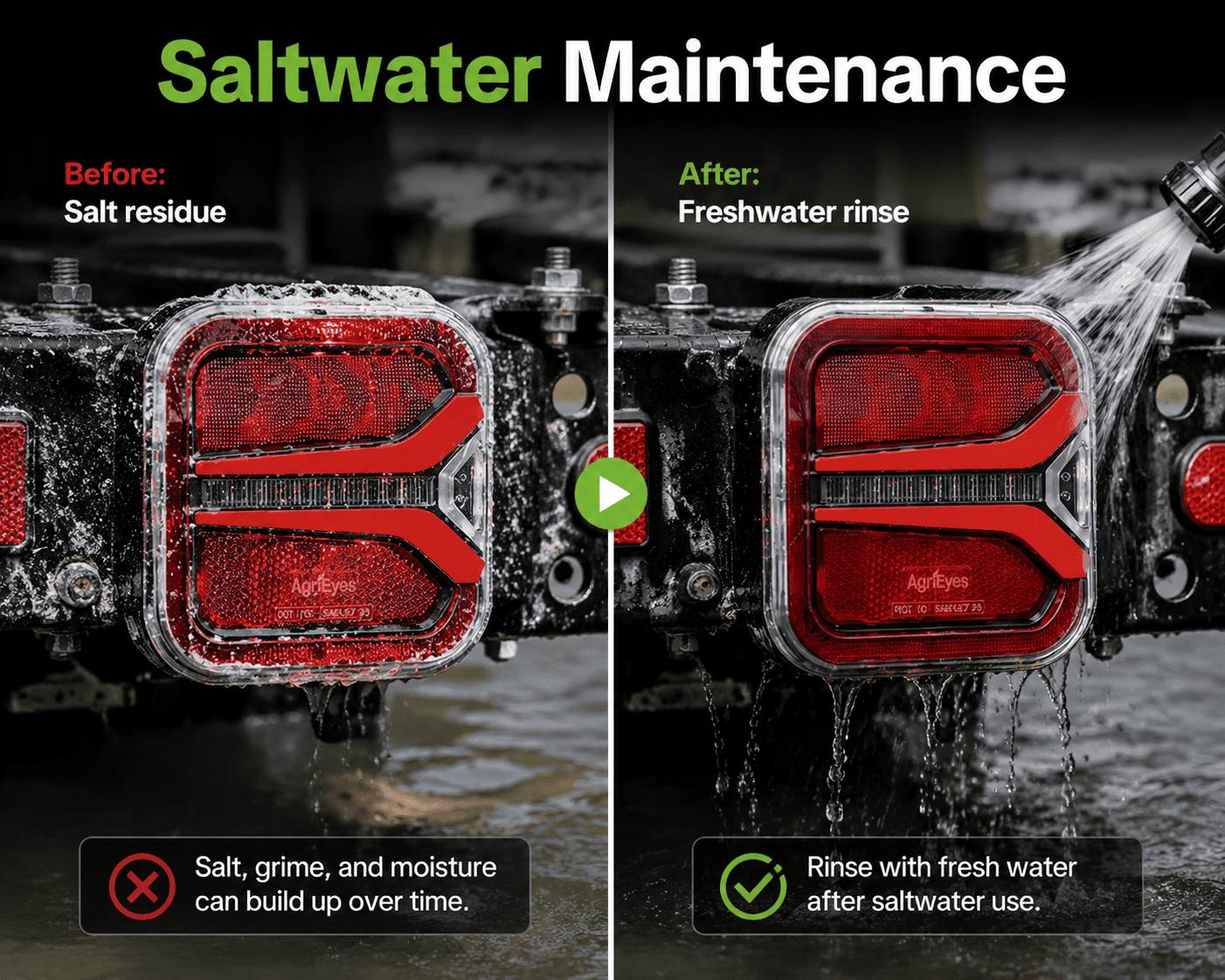
Best Practices for Protecting Wireless Lights
To maintain watertight seals and protect internal electronics over long-term use, follow these operational precautions:
- Flush-Seat the Charging Port Cap: Always verify that the rubber charging port plug is pressed completely flush into the housing before backing near the water line. A loose cap allows moisture to enter the battery port.
- Position Protectively: Whenever possible, place lights on solid steel frame sections where they are clearly visible to trailing traffic and protected from direct mechanical impacts.
- Rinse After Saltwater Dips: Salt residue degrades rubber gaskets and metal components over time. Always spray your lights with fresh water after launching in saltwater environments.
How to Maintain Wireless Trailer Lights After Launching
Taking a few minutes for quick post-launch care will extend the operating lifespan of your portable lights:
- After Freshwater Launches: Wipe down the outer lens with a dry cloth, verify the rubber charging cap seal remains tight, and store the unit in a dry toolbox.
- After Saltwater Launches: Thoroughly rinse the light housing, rubber charging cap, and magnetic bases with fresh tap water to clear salt buildup. Dry completely before recharging via USB.
Frequently Asked Questions
Can you leave magnetic trailer lights on while backing into the water?
If the lights are designed for temporary water exposure and the manufacturer permits it, they may remain installed during launching. However, many users prefer removing portable magnetic lights before entering deeper water to avoid accidental impacts with submerged debris or boat hulls.
Will saltwater weaken magnetic trailer lights?
Saltwater causes surface rust on unprotected raw steel, which can reduce magnetic grip strength over time. Using rubber-coated magnetic bases helps protect trailer surfaces and prevent rust accumulation.
Are wireless tow lights better than traditional wired LED trailer kits?
Wireless systems eliminate the need to trace corroded frame wires and ground bolts beneath your trailer. They offer instant plug-and-play installation and can be swapped easily between boat trailers, utility rigs, and flatbeds.