For many trailer owners, the hardest part of adding tail lights isn't choosing the lights—it's dealing with messy wiring harnesses, corroded grounding screws, and constant electrical troubleshooting. Traditional hardwired kits require stripping copper, splicing wires, and routing cables beneath the frame, which can easily turn into a multi-hour project.
Modern wireless technology removes the complicated installation process entirely. Systems like the solar-assisted AgriEyes AG-T328 Wireless Towing Light Bar allow you to achieve street-legal lighting compliance in just a few minutes—without touching a wire or picking up a drill.
Whether you are pulling a boat trailer, flatbed, farm utility rig, or RV dinghy vehicle, here is a practical step-by-step guide on how to properly set up and secure magnetic wireless trailer lights.
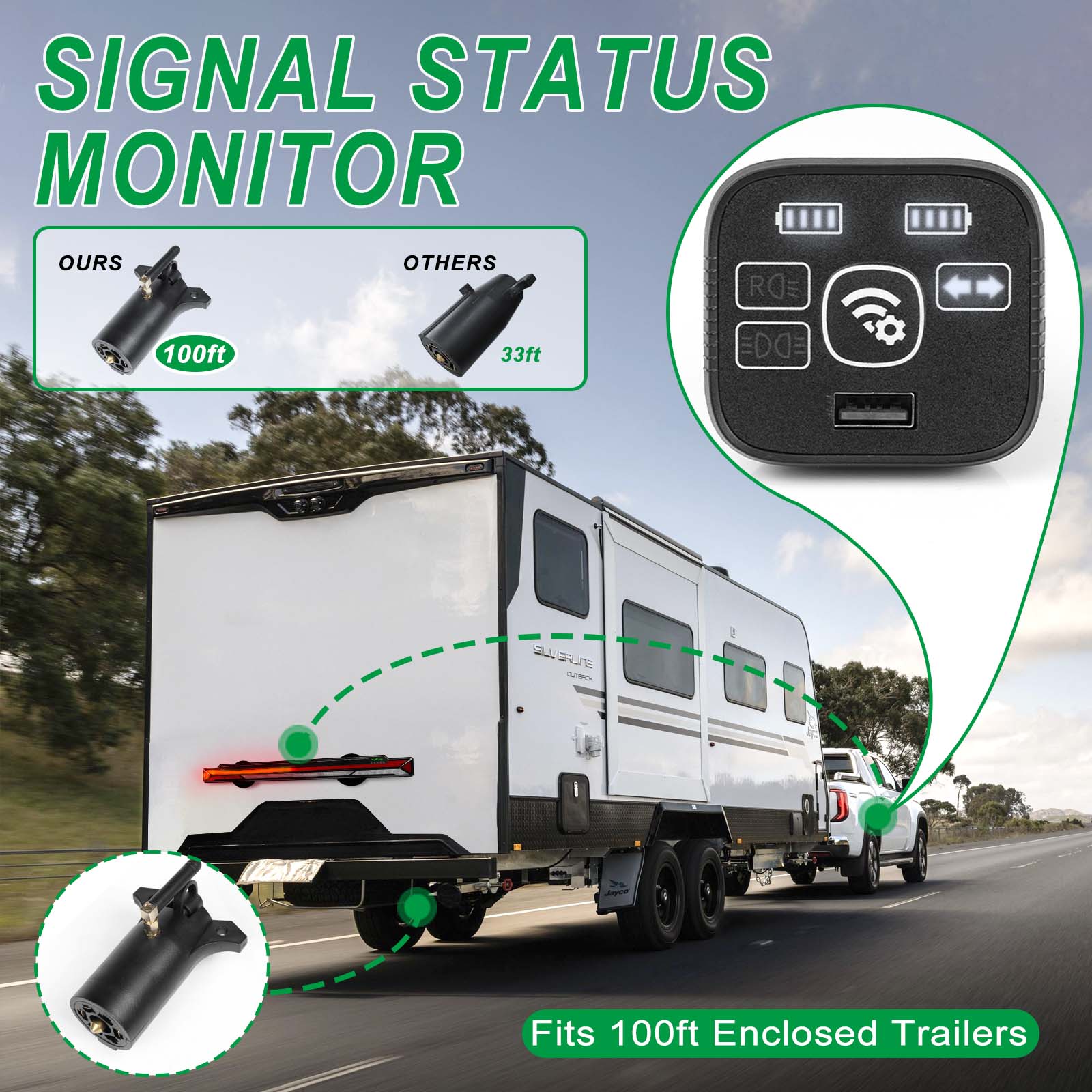
Before mounting your light bar, establish a signal connection between your tow vehicle and the wireless lights.
Locate your truck, SUV, or motorhome’s standard 7-pin blade or 4-pin flat towing socket.
Insert the wireless signal transmitter directly into the trailer socket.
Depending on your vehicle's trailer wiring system, the transmitter receives lighting signals through the socket and wirelessly communicates brake, hazard, and turn signal commands to the light bar at the rear.
Magnetic lights rely on direct metal contact for maximum grip strength and stability.
Clean the Frame: Wipe down the steel mounting area on your trailer bumper or crossmember with a microfiber towel to remove dirt, mud, or grease.
Where NOT to Mount Magnetic Trailer Lights:
❌ Aluminum trailer walls or bumpers (magnets will not adhere)
❌ Plastic body panels or bumpers
❌ Fiberglass RV bodies or boat hulls
❌ Dirty, heavily rusted, or loose metal panels
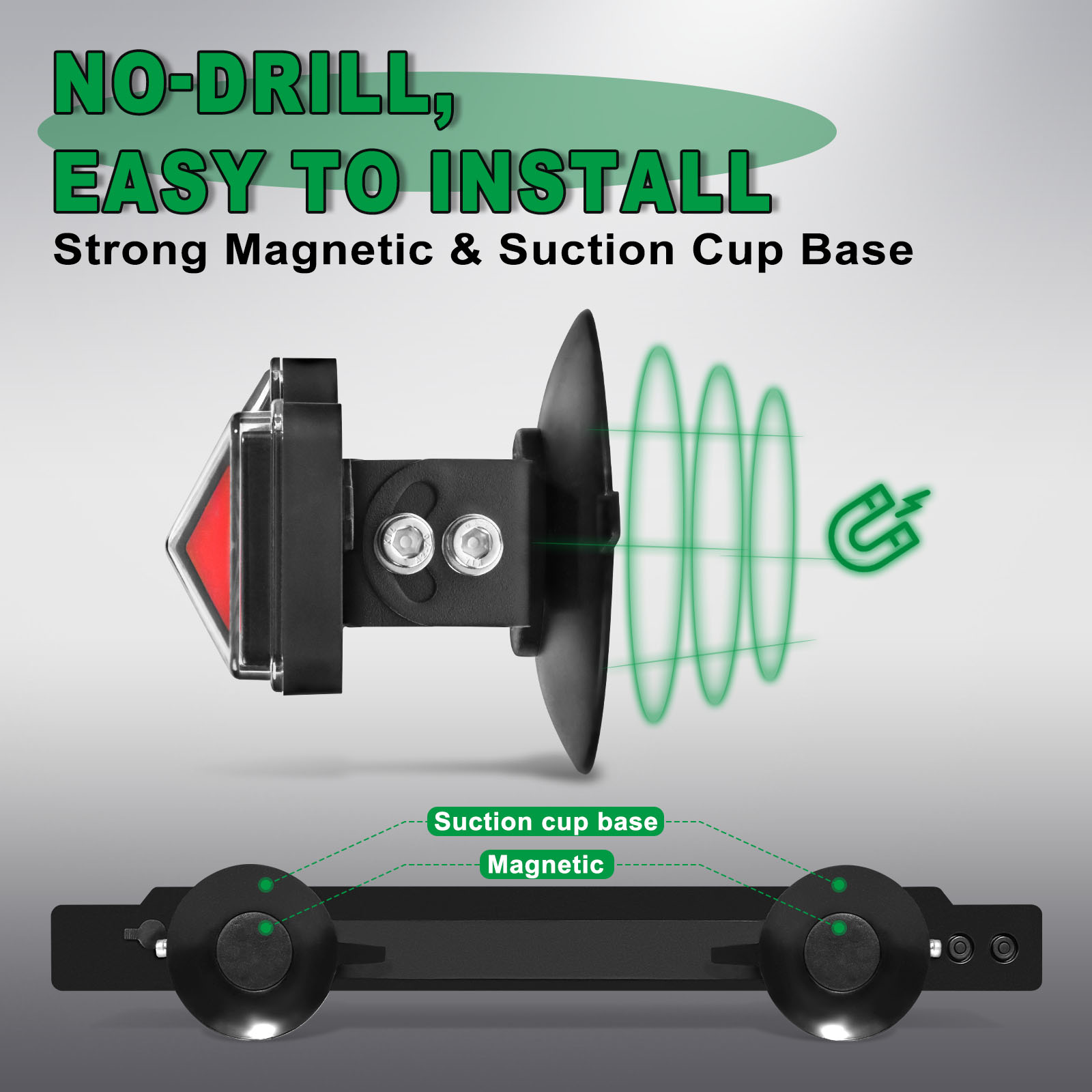
Position your wireless light bar symmetrically at the rear of your rig:
Center and Level: Place the AgriEyes AG-T328 light bar centered along a solid steel crossmember or bumper.
Check Orientation: Ensure the built-in license plate illuminator faces downward toward your license plate bracket.
Set the Magnets Firmly: Lower the high-intensity magnetic bases directly onto the clean steel surface. The protective rubber coating on the magnets prevents micro-scratches on painted surfaces while resisting vibration on the road.
For added safety during highway towing, we recommend using the included steel safety tether as a secondary backup.
Locate the integrated steel safety tether cable attached to the light bar housing.
Loop the steel cable securely around a structural frame member, safety chain loop, or roof rack.
Fasten the heavy-duty safety clip back onto the tether loop.
In the rare event that an extreme pothole or severe road debris disrupts the magnetic hold, the safety tether acts as a mechanical fallback, keeping your light bar attached to your rig instead of dropping onto the highway
When towing a tall enclosed cargo trailer, livestock hauler, or large boat, verifying that your rear lights are working usually requires pulling over or asking someone else to check. An in-cab monitor lets drivers confirm lighting status without leaving the vehicle.
1.Plug the compact receiver into your 12V console socket or USB power port inside the cab.
2.The monitor displays real-time connection status, turn signal replication, and exact battery levels right on your dashboard—while also emitting an audible beeping alert when reversing to keep you aware of backing maneuvers. This gives you complete visibility and audio feedback straight from the driver's seat.
Before pulling onto the road, perform a 10-second operational check:
Turn on your vehicle's headlights and activate both turn signals to verify lighting replication.
Verify the Weather Seal: If you recharged your light bar via USB before the trip, make sure the rubber charging port plug is pressed completely flush into the housing. A fully seated cap keeps rain and heavy road spray out of internal electronics.
Daylight Battery Extension: Solar panels on units like the AgriEyes AG-T328 help extend battery runtime during daylight conditions, reducing how often you need to recharge via USB.
Keep the Panel Clean: Periodically wipe dust and road grime off the top solar panel to maintain solar absorption.
Clean Storage: Store your wireless light kit inside a dry toolbox or storage bag when not in use.
| Installation Step | Target Area | Key Action |
|---|---|---|
| 1. Transmitter Setup | Vehicle Tow Socket | Insert 7-pin or 4-pin transmitter |
| 2. Surface Preparation | Trailer Bumper / Frame | Clean steel area; avoid aluminum or plastic |
| 3. Magnetic Mount | Rear Bumper / Frame | Set rubber-coated magnets firmly onto clean metal |
| 4. Safety Tether | Structural Frame Member | Loop steel cable tightly as a mechanical backup |
| 5. In-Cab Monitor | Vehicle Dash / 12V Socket | Plug in for real-time signal and battery tracking |
Do wireless trailer lights need any wiring?
No. Wireless systems use a transmitter connected to your vehicle's trailer socket and communicate lighting signals directly to the rear lights without physical wires.
Can magnetic trailer lights stay attached at highway speeds?
When properly mounted on clean steel surfaces and used with a secondary steel safety tether, magnetic trailer lights are designed for high-speed highway towing applications.
Do wireless trailer lights work on aluminum trailers?
Magnetic bases require ferrous metal (steel) surfaces to adhere. For aluminum trailers, magnetic lights must be mounted on steel frame sections, bumper brackets, or equipped with mounting adapter plates.
How long does it take to install wireless trailer lights?
Most wireless systems can be installed within a few minutes without using any tools or drilling holes.
Eliminate wiring hassles and simplify your pre-trip routine. Explore how the AgriEyes AG-T328 Wireless Towing Light Bar combines solar-assisted power, real-time in-cab monitoring, and tool-free magnetic mounting for reliable highway towing.