The shift toward wireless, magnetic-mount trailer lights has been a massive win for DIY haulers, agricultural operators, and boaters alike. Being able to slap a set of taillights onto a frame in under 30 seconds without wrestling with corroded wires or broken 7-pin plugs feels like pure freedom.
However, as wireless lights become more common on the highway, a growing number of drivers are sharing the same two frustrating horror stories on trucking forums: "My magnetic light flew off on the interstate," and "My brand-new lights are already full of water and fog."
When you rely on these lights to protect your rig and keep you street-legal, a failure isn't just annoying—it’s a safety hazard.
To help you get the most out of your gear, let’s look at the actual physics behind why magnetic lights fail and how you can permanently protect your setup from highway drops and moisture damage.
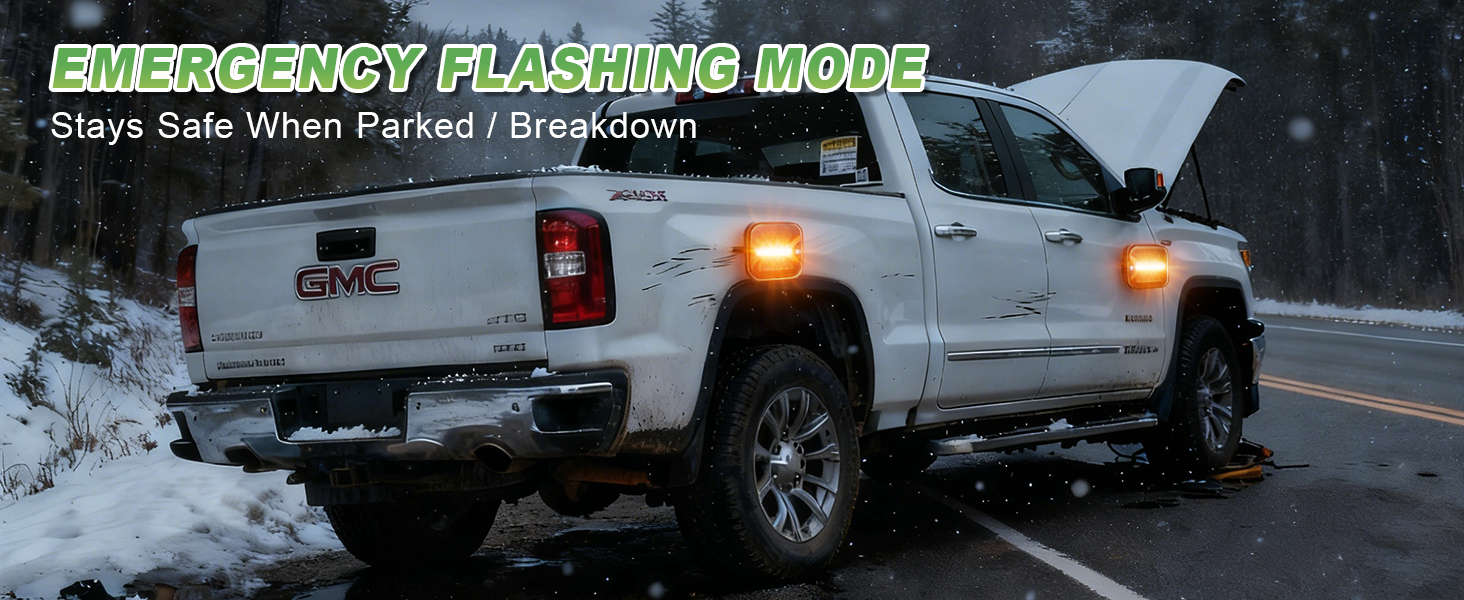
When a magnetic light falls off at 70 MPH, it's rarely because the magnet itself is "weak." Instead, it is almost always caused by a combination of hidden environmental factors that break the magnetic bond.
If you want to keep your lights firmly attached, watch out for these three culprits:
The Mud and Rust Barrier: Magnetic pull decreases exponentially with distance. Even a seemingly thin layer of road grime, thick dust, or bubbling rust on your trailer frame acts as a physical spacer. If the magnet isn't making direct, metal-to-metal contact, its holding power can drop by over 50%.
Steel Thickness Matters: Magnets require a thick, solid iron or steel surface to achieve full saturation and maximum grip. If you attach a heavy magnetic light to ultra-thin sheet metal, a flimsy license plate bracket, or certain aluminum-blended alloys, the magnet cannot pull with its full rated strength.
Vibration and Shear Force: Road bumps create intense vertical vibrations. While a magnet is great at resisting a direct pull, it is much weaker against "shear force"—the sideways sliding motion caused by highway potholes and wind resistance. Once a light starts to slide, wind caught under the housing will rip it off instantly.
Pro-Tip for Secure Mounting: Always wipe both the trailer surface and the rubber boot of the magnet clean before mounting. For long-distance highway hauls, choose mounting locations on thick structural steel frames rather than thin body panels, and ensure the light sits completely flush without any rocking room.
Never Skip the Safety Tether: As a golden rule for high-speed highway driving, always use the security steel tether cable (safety wire) included with your lights to create a secondary backup connection. Anchor the steel cable to a secure point on your trailer frame. In the rare event that a massive road hazard or violent pothole breaks the magnetic bond, the tether will prevent your light from bouncing into highway traffic or being lost forever.
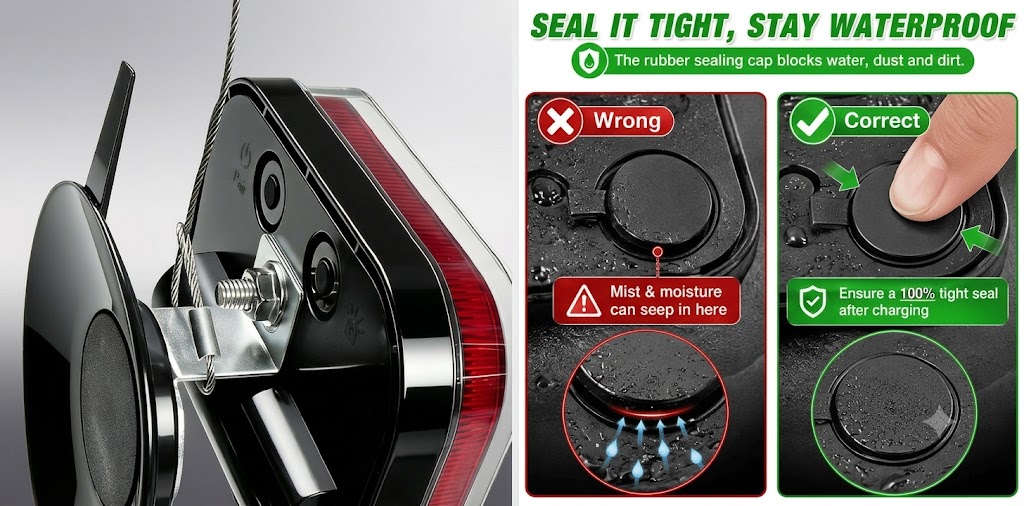
There is nothing worse than looking at your taillights and seeing water droplets trapped behind the lens. Water ruins internal circuitry, corrodes battery terminals, and eventually kills your LEDs.
Many drivers assume a light with moisture in it is simply "cheaply made," but water ingress typically happens in one of two ways:
Thermal Shock and Vacuum Ingress: Imagine driving on a hot summer highway; the internal components of your lights naturally warm up. If you suddenly back your trailer into a freezing boat ramp or drive through a deep, cold puddle, the rapid temperature drop causes the air inside the light housing to contract violently. This creates a temporary internal vacuum that can actually suck moisture right through microscopic gaps in the seals or seams.
The Pressure Washer Trap: Modern LEDs often carry high waterproof ratings like IP67 or IP69K. However, those ratings are tested against predictable laboratory angles. When you take a commercial-grade high-pressure power washer to clean mud off your trailer and blast the light seams at point-blank range, you are applying forces that can overpower almost any standard automotive seal.
Pro-Tip for Moisture Prevention: Never blast your lighting equipment directly at close range with a pressure washer; treat them with the same care you would give to camera gear or dashboard electronics. If you use your lights for marine or boat trailer applications, let them cool down for a few minutes before submerging them to prevent thermal vacuum leaks.
The Critical Charging Port Check: Because wireless lights contain internal rechargeable batteries, they feature a charging port protected by a thick rubber sealing cap. Every single time you unplug your charger, make sure to firmly press and seat the rubber plug back into the port. Even a microscopic gap or a slightly loose cap will allow water road-mist to seep in during wet weather, completely bypassing the light's waterproof seals and damaging the internal motherboard.
Long-Term Care is KeyWireless safety tech is incredibly reliable when treated with the right respect. By understanding the physics of magnetic attachment, utilizing your safety tethers, and protecting your charging port seals, you can ensure your lights stay exactly where they belong: bright, dry, and firmly secured to your rig.