7 Practical Steps to Troubleshoot Trailer Lights Not Working | AgriEyestrailer-lights-not-working-troubleshooting-guide
You've hitched up the trailer, loaded your gear, and turned on the lights—only to walk around back and find the tail lights, brake lights, or turn signals completely dark. A trailer light that suddenly stops working doesn't always mean the light fixture itself has failed.
More often than not, the problem comes down to a loose pin, a rusty ground connection, or a pinched wire somewhere along the frame. Working through a few simple checks can help you narrow down the issue before buying replacement parts.
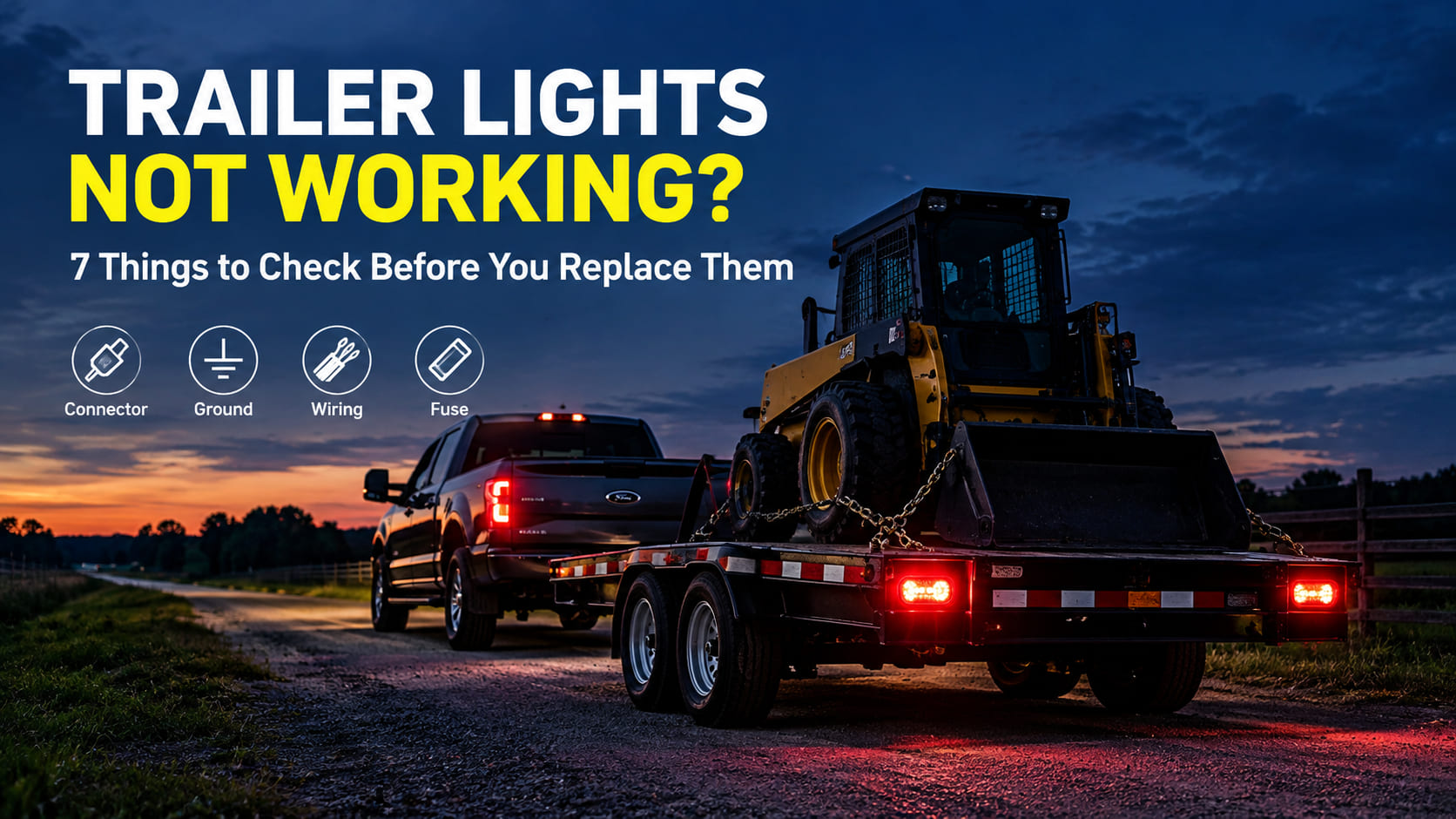
Follow these 7 practical inspection steps to diagnose and fix your trailer light problems quickly:
The plug at the end of your trailer harness sits right behind your rear tires, where it constantly catches road salt, mud, rain, and road debris. Over time, grime and oxidation build up inside the pins and interrupt electrical contact.
- Look inside the plug: Check both the vehicle socket and trailer plug for bent pins, packed dirt, or greenish copper oxidation.
- Scrape it clean: Spray electrical contact cleaner inside the plug terminals and scrub the pins clean with a small terminal brush or electrical pick.
- Protect the contacts: Apply a small dab of dielectric grease to the pins before rejoining the connectors to seal out moisture.
Before tearing into the trailer wiring, confirm that your truck or SUV is actually outputting power at the bumper socket.
- Plug in a socket tester: Insert an inexpensive 4-pin or 7-pin inline circuit tester into your vehicle's receptacle. Turn on the headlights, hazard flashers, and press the brake pedal to verify signal output.
- Check the under-hood fuse box: Many trucks use dedicated towing fuses for trailer functions (often marked TRLR TOW, TRLR TAIL, or TRLR STOP/TURN). A blown towing fuse can disable trailer power while your vehicle’s own tail lights operate normally.
Trailer lights require a solid ground connection through the trailer wiring and tow vehicle frame. A loose, dirty, or corroded ground causes flickering, dim lights, or erratic behavior when multiple functions are used at once.
- Find the main ground wire: On standard 4-way harnesses, look for the white wire attached directly to the metal trailer tongue or frame.
- Scrape down to bare metal: Unbolt the mounting screw, sand away any rust, dirt, or paint on the frame, clean the wire ring terminal, and re-tighten it securely.
- Check light housing grounds: On traditional bolt-on light fixtures that ground through their mounting studs, rust around those studs can cut off the ground circuit completely.
Trailer wiring flexes during sharp turns, hangs near road debris, and runs along rough metal edges under the chassis.
- Check pinch points: Look closely at spots where wires pass through frame cutouts, near leaf springs, or around mounting brackets.
- Watch for exposed copper: Scraped wire insulation touching the metal trailer frame causes a short circuit, which will instantly blow your vehicle's trailer fuse.
- Inspect wire splices: Crimp connectors or old electrical tape wraps degrade over time, letting moisture seep in and corrode the copper wire inside.
If your trailer uses traditional incandescent bulb housings instead of fully sealed LED units, a failed bulb or loose socket contact is a common culprit.
- Inspect the filament: Remove the lens cover. If the metal filament inside the bulb is snapped or the glass appears blackened, replace the bulb.
- Clean the socket: Moisture trapped inside lens covers often causes surface rust on the socket contacts. Scrape away corrosion with a small screwdriver so the bulb seats firmly against the contact points.
If visual checks don't reveal the problem, use a standard 12V test light or digital multimeter to track down where the circuit loses voltage.
- Attach the ground clamp: Connect your tester's ground lead to a clean, bare spot of metal on the trailer frame.
- Probe along the circuit: Start at the tongue connector plug and work back toward the rear lights, probing connection points along the wire path.
- Isolate the break: If power reaches one side of a connection but disappears on the other side, you've pinpointed the exact damaged section of wiring.
If you use magnetic or wireless LED trailer lights for flat-towing, equipment hauling, or temporary setups, issues often stem from power or signal delivery rather than physical trailer wiring.
- Check the battery: Ensure the light units are fully charged via USB-C or DC charger before heading out on the road.
- Check the transmitter: Ensure the 7-pin or 4-pin wireless transmitter plugged into your vehicle's rear socket is seated firmly and receiving power.
- Confirm pairing: If signals drop or flicker, verify that the transmitter and light units are properly paired according to the manufacturer's setup steps.
Quick Troubleshooting Breakdown
| What You See | Possible Cause | What to Check First |
|---|
| Every light on the trailer is dark | Blown fuse, dirty plug, or no vehicle power output | Vehicle towing fuse box & bumper socket |
| Lights flicker or dim during use | Loose or corroded ground connection | Sand the tongue ground terminal down to bare metal |
| Only one side or function isn't working | Failed bulb, loose socket, or cut wire lead | Bulb filament, socket contacts & wire lead to that light |
| Fuse pops as soon as you plug in | Short circuit (bare wire touching metal frame) | Scraped or pinched wire insulation along the harness |
Frequently Asked Questions
Q: Why aren't my trailer lights working if my truck lights work fine?
Many tow vehicles run dedicated circuits, relays, and fuses specifically for trailer towing. This means your vehicle’s own tail lights can function normally even if a dirty bumper socket, blown towing fuse, or loose trailer ground cuts power to your trailer.
Q: Why is only one side of my trailer lights working?
When an issue affects only one side, it is typically isolated to that specific circuit. Check for a burned-out bulb filament, a loose wire lead on that side, or rust around that fixture’s ground stud.
Q: Can a bad ground cause trailer lights to flicker?
Yes. A weak ground connection creates electrical resistance, which starves the fixtures of steady current. This can cause lights to flicker, dim, or shut off when multiple functions (like running lights and brake signals) are activated simultaneously.
Tired of Wiring Headaches? Upgrade to AgriEyes Wireless Lighting
If your trailer harness is cracked, corroded, or constantly causing wiring issues, chasing down electrical breaks every few months gets frustrating. Upgrade to AgriEyes magnetic wireless LED trailer light kits for 10-second installation and instant peace of mind on every tow.