If you've ever had to change a flat or set up a work zone on the shoulder of a busy highway, you know how nerve-wracking it can be. Cars fly past at 65 mph or faster, giving drivers just a split second to notice you and react.
Throwing a single flashing beacon on your cab or dropping a flare on the asphalt is a start, but it isn't always enough. In fact, proper warning light placement —where you put your lights, how high they sit, and the flash pattern you choose—makes all the difference between a clear heads-up and a disorienting mess.
Understanding how passing drivers actually process roadside safety lights helps you set up a safer, more organized scene every time you pull over.
When a car is hauling down the road at highway speeds, the driver is covering nearly a football field's length every few seconds. By the time they spot a hazard on the shoulder, they need immediate, clear visual information to make a safe move.
- Avoiding blinding glare: At night, a cluster of ultra-bright, chaotic strobe lights can backfire. Instead of helping, it can temporarily blind drivers or create a disorienting "wall of light" that makes it hard for them to gauge distance.
- Giving early notice: The goal is to draw a driver's eyes early—well before they reach your vehicle—without throwing high-powered beams directly into their windshield.
- Working alongside traffic controls: Flashing lights are a great tool for visibility, but they aren't a magic fix. They should always work together with traffic cones, warning signs, and physical barriers.
Setting up a safe warning area isn't a one-size-fits-all job. You have to adapt your setup to the road you're on, the weather, and the terrain. Getting your warning light placement right starts with three things:
- Match distance to road speed: Fast-moving traffic needs a longer warning zone. How far back you set up depends heavily on the speed limit, visibility, and weather. Always stick to your local traffic control guidelines and MUTCD standards for proper taper lengths.
- Watch out for curves and blind spots: If you're stopped just past a hill crest or around a sharp bend, drivers won't see your truck until it's too late. Position your initial warning devices back before the curve or crest so oncoming traffic gets plenty of advance notice. This is where understanding sightlines and elevation matters most.
- Mix high and low positions: Mount a beacon up high on your vehicle so long-distance traffic can spot it, and place secondary lights lower to the ground to define the immediate work area. Combining heights ensures visibility across changing terrain and different driver eye levels.
Relying on a single strobe light often leaves dangerous visual dead zones, especially around large utility trucks or trailers. A coordinated set of roadside safety lights solves this problem.
- Multiple Warning Points: Spreading out a few warning lights helps outline the physical shape of your work zone, reducing blind spots caused by the vehicle itself.
- Sequential Flash Patterns: Lights that flash in an orderly, wave-like sequence stand out much better against background city lights, helping drivers instantly recognize an active work zone.
- Controlled Brightness: You want lights bright enough to grab attention during bright daylight, but tailored enough at night so you don't blind the very people you're trying to warn.
If you do temporary roadside work, towing, or utility repairs, dragging long power cables along the shoulder is time-consuming and dangerous. Portable wireless warning lights offer a quick, flexible solution.
- Synchronized Wireless Control: Portable systems like the AgriEyes W242R use a wireless master controller to link multiple beacons together. You can choose from eight different flash modes—including forward and reverse running-light effects—to build a clean, coordinated warning pattern across your scene.
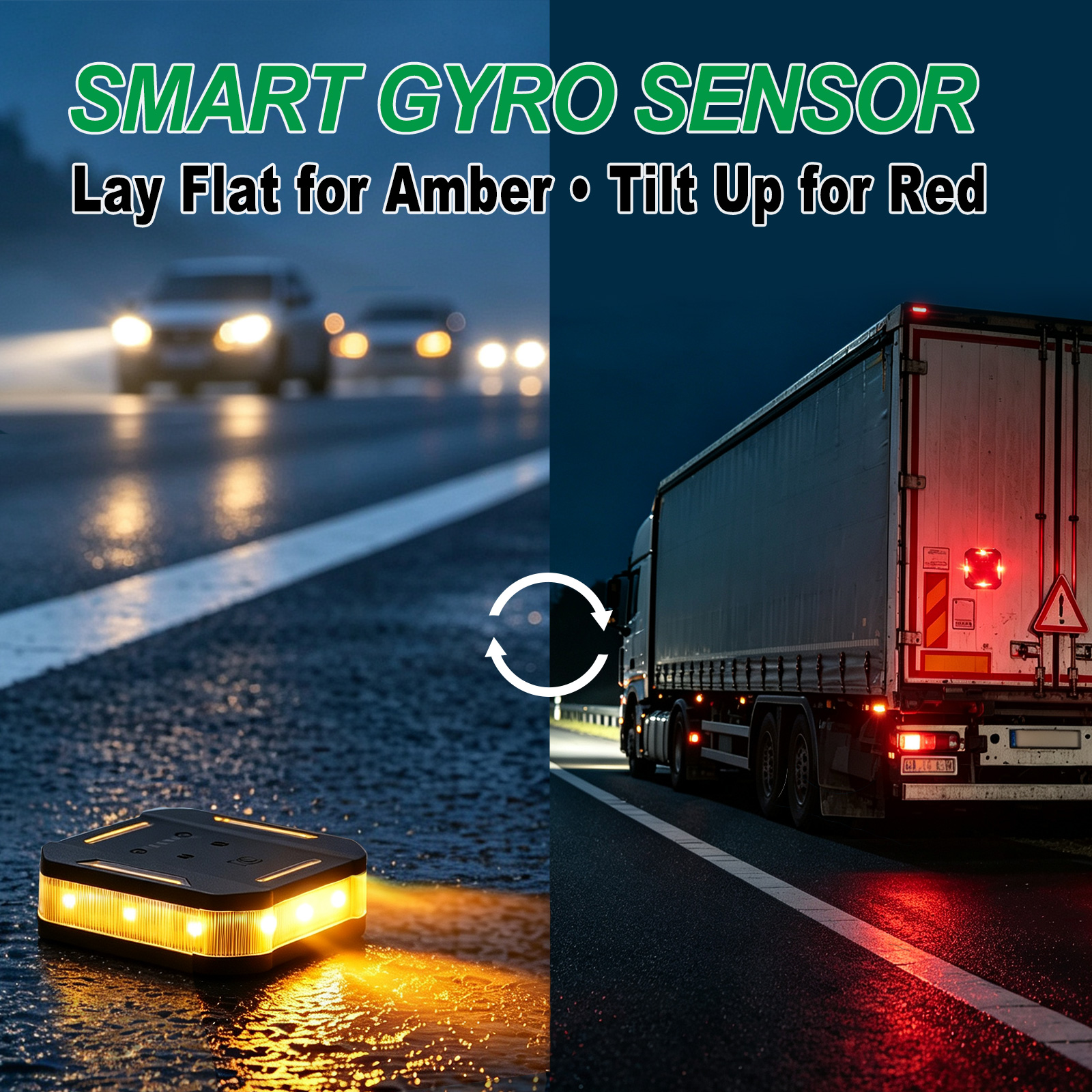
- Position-Based Lighting: A built-in gyroscope automatically adjusts how the light works based on how you place it. Tilt a pod past 30 degrees, and the top red warning LEDs kick on. Lay it flat, and the side amber lights provide a steady directional warning.
- Convenient Storage & Power Dock: The system comes in a rugged charging dock case that keeps your beacons organized and topped off between jobs. The dock itself packs a 12,000mAh battery with 30W USB-C fast charging, USB-A ports, and a 12V DC socket to power up your other gear in the cab.
- Flexible Mounting & Outdoor Durability: Strong magnetic bases let you slap the pods onto truck beds or trailer frames in seconds, and their stackable design lets them sit securely on top of standard traffic safety cones. With IP67 waterproof housings, tough PC lenses, and TPU protective bumpers, they easily handle rain, mud, and rough field work.
Frequently Asked Questions
Q: Are sequential warning lights better than traditional flashing lights?
Sequential lighting patterns make multiple warning points look organized and easier for drivers to parse at a glance. However, they aren't a replacement for proper traffic cones, signs, or flaggers—they are designed to enhance your overall visibility setup.
Q: How far apart should roadside warning lights be placed?
There's no single fixed distance for every situation. Spacing depends on road speed, weather, terrain, and the type of job you're doing. Always refer to local traffic management rules and MUTCD standards for your specific scenario.
Q: How do wireless cascading warning lights work?
They use a central wireless controller that communicates with each light pod. Once switched on, you can select different synchronized flashing modes—like a sequential running pattern—to create a unified visual barrier along the road.
Improve Visibility Around Roadside Work Areas
A little extra thought when placing your warning lights goes a long way. Combined with the right traffic cones and signs, a well-planned visual setup gives approaching drivers the heads-up they need to slow down and give you space.
If you need a quick, cable-free way to set up coordinated wireless warning lights on the job, the AgriEyes W242R Smart Cascading Warning Light Kit is worth a look.