Published: July 30, 2026
If you scan online marketplaces or budget shopping apps, you will find dozens of generic wireless magnetic trailer lights priced as low as $20 to $30. On paper, they sound like an incredible bargain: wireless convenience, magnetic mounting, and rechargeable batteries for the price of a takeout lunch.
However, experienced haulers and fleet operators know a fundamental truth about towing gear: cheap safety equipment always costs more in the long run.
⚠️ The Real Risk: When a budget light bar fails on the highway, it doesn't just stop working. It flies off into the windshield of the vehicle behind you, ruins your schedules, or leaves you stranded on a dark shoulder waiting for a police citation.
Before you buy into the low-price trap, let’s look at the actual engineering shortcuts hidden inside budget magnetic lights—and what a professional-grade setup looks like.
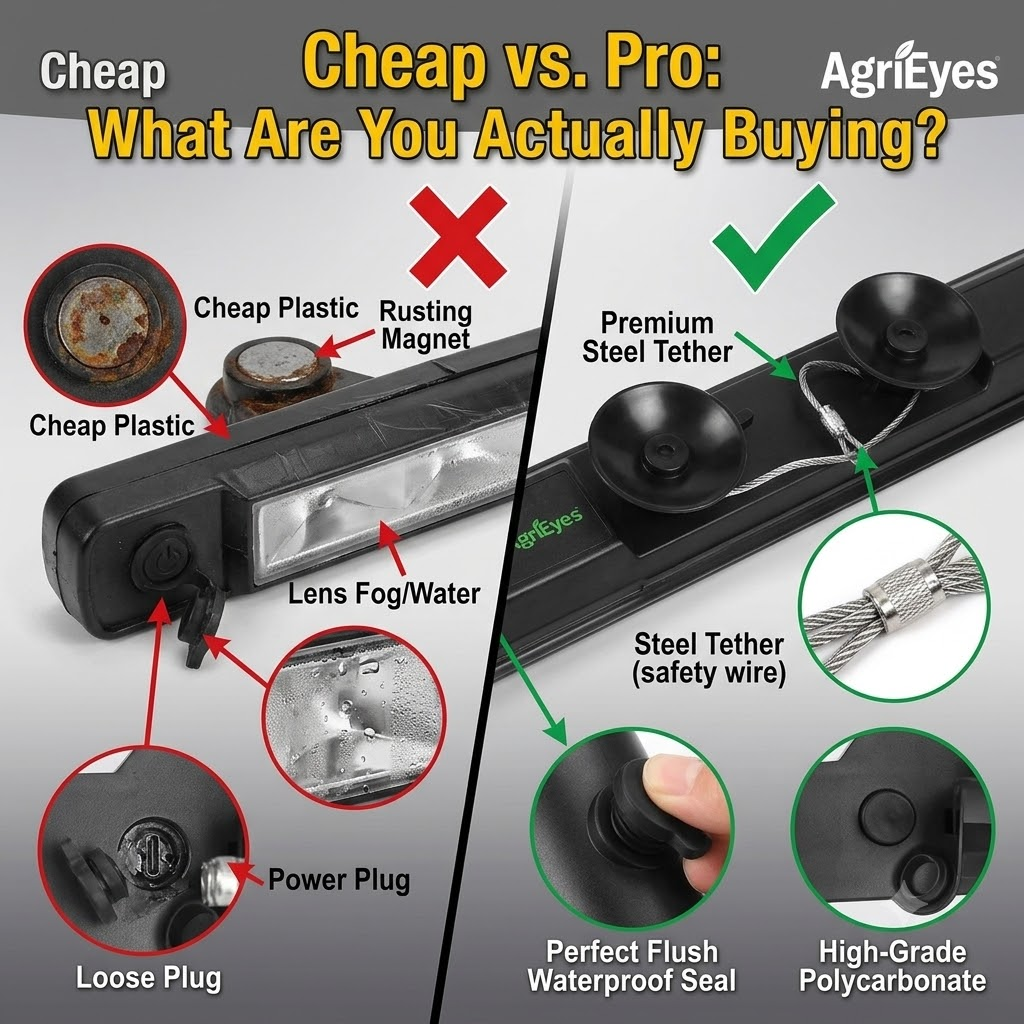
Cheap magnetic lights cut costs by using standard, thin magnets with flimsy plastic or low-grade rubber covers.
❌ The Low-Price Risk: These cheap covers quickly tear or degrade from road friction. Once the bare magnet is exposed, it scratches your vehicle’s paint, rusts rapidly when exposed to road salt, and loses its grip over every major highway bump. Furthermore, budget kits rarely provide any secondary fallback, meaning a single aggressive pothole can launch your light into traffic.
✅ The Professional Grade: Industrial systems utilize thick, heavily shielded, rubber-coated magnetic assemblies built to absorb high-speed road vibrations without sliding. More importantly, professional setups never rely on magnets alone—they include an integrated heavy-duty security steel tether cable. By clipping this safety wire directly to a structural frame member, you create an unbreakable mechanical backup that prevents highway drop-offs entirely.
When you drive at 60 MPH through a heavy rainstorm, water isn't just falling on your lights—it is being forced against the seams with incredible aerodynamic pressure.
❌ The Low-Price Risk: Budget wireless lights are often held together by simple adhesive seals that crack under temperature swings. Worse yet, their USB charging ports are frequently protected by thin, loose-fitting silicone flaps that easily pop open from wind resistance or high-pressure farm washdowns, instantly shorting out the battery motherboard.
✅ The Professional Grade: Commercial-grade systems feature sonic-welded housings rated for extreme weather protection. Their charging ports utilize specialized, thick rubber sealing plugs designed to sit perfectly flush within the mold. When properly pressed into place after a charge, it creates a true pressure-resistant barrier that blocks out road mist, torrential rain, and agricultural washdown spray.
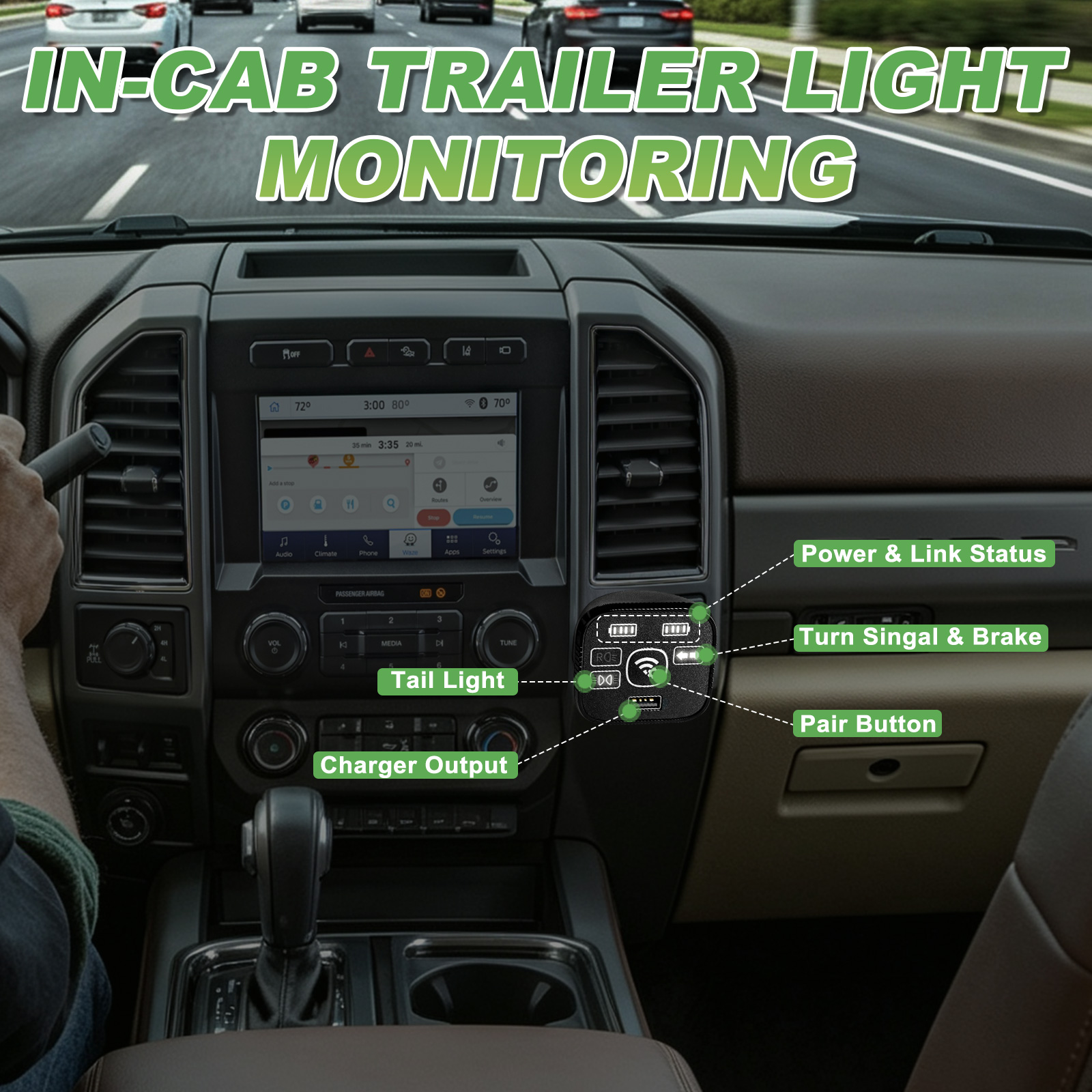
A wired trailer light tells you it's broken when a fuse blows or your truck dash alerts you. With a cheap wireless light, you are driving completely blind.
❌ The Low-Price Risk: With generic alternatives, you have zero idea what the battery status is while driving. If the light dies three hours into a night haul, you won't know until you see flashing police lights in your rearview mirror.
✅ The Professional Grade: A reliable wireless ecosystem relies on an in-cab dashboard monitor that syncs directly with the light bar. It sits cleanly on your console, giving you real-time visual tracking of signal strength, turn signal replication, and exact battery percentages right from the driver's seat.
Your trailer lights are the only thing protecting your rig, your cargo, and the drivers behind you from a catastrophic highway collision. Don't compromise your safety with cheap, unmonitored toys that leak and slide.
If you are looking for a commercial-grade, solar-assisted system built with heavy-duty steel tethers, flush-fit waterproof seals, and a dedicated dashboard monitor, discover how the AgriEyes AG-T328 shifts wireless towing into the professional era.
[ Stop Guessing on the Highway: Upgrade to the AgriEyes AG-T328 Wireless System Now ]